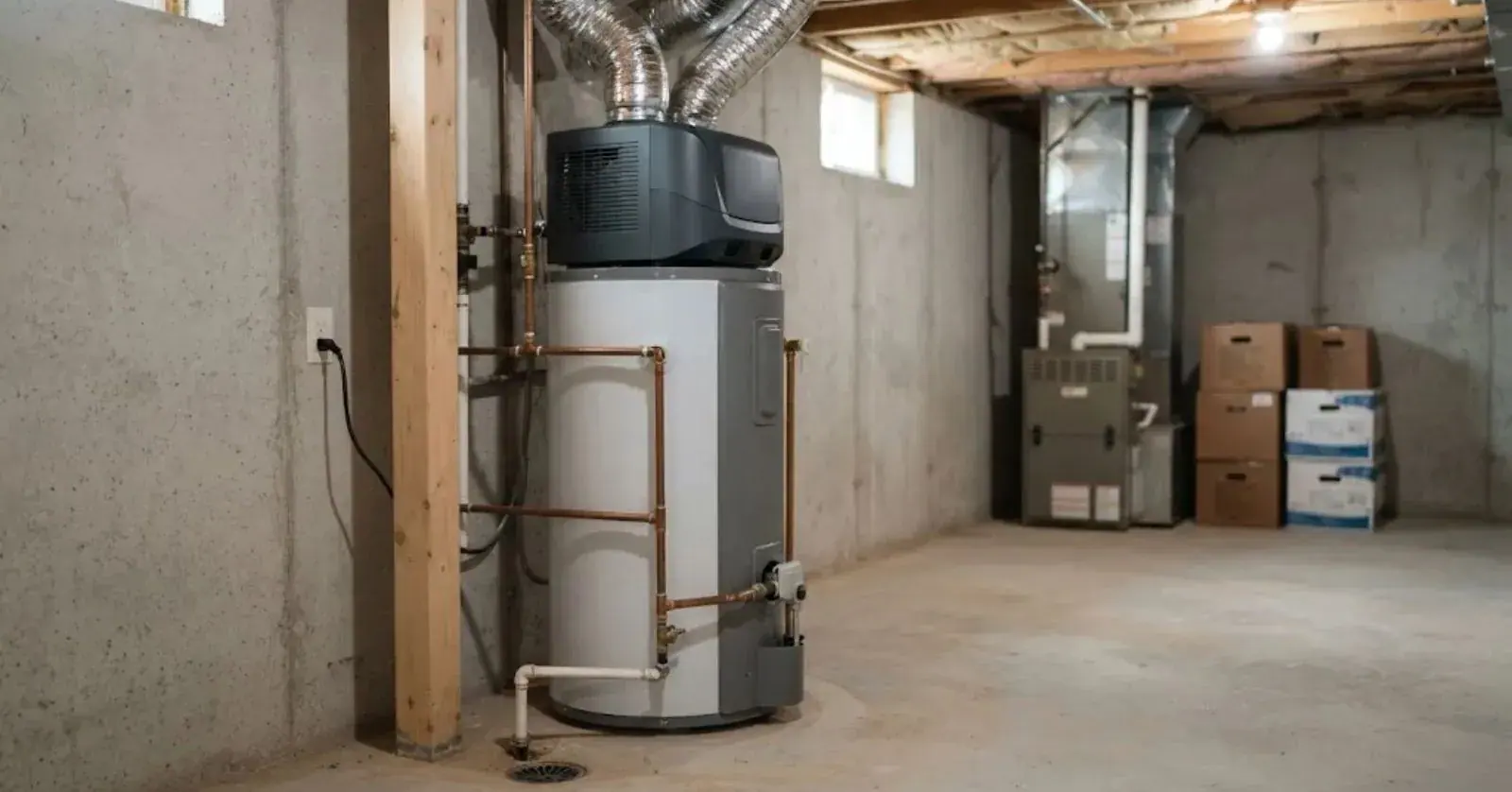
Failed heater
No hot water right now: when replacement is the answer
Replacement becomes the sensible choice when the tank itself has failed, when repeated repairs are stacking up, or when the unit is old enough that further parts would only delay the end. A tank that leaks from its body, with dry fittings and a wet base, cannot be patched. If the heater simply has a bad part, the water heater repair page explains when a fix makes more sense.
Plumbers decide by looking, not guessing. They read the rating label for the date code, check for rust at the base and fittings, test the burner or elements and look at the venting. You are shown what they see so the choice is yours, not a sales pitch.
What to do if the water heater has failed and water is on the floor
A short list that protects your home while the replacement is arranged.
Before the plumber arrives
- Shut the cold supply.Turn the valve above the tank clockwise. If it will not turn, close the main shutoff for the house.
- Turn off power or fuel.Switch off the breaker for an electric unit, or set the gas control to off for a gas unit if it is dry and within easy reach.
- Keep clear of wet electrics.If water has reached outlets or the panel, stay out and call from a dry spot.
- Gas smell means leave.Go outside, leave switches and phones alone indoors, and call Nicor Gas at 800-942-9727 or 911.
- Clear a path.Move boxes and clutter so the plumber can reach the tank and carry the new unit in.
Call the 24/7 line at (847) 281-8626 and describe the fuel type, the tank size on the label and where it sits in the home.
How an emergency replacement unfolds
The order matters, because the old tank must be made safe before anything is removed.
Call and describe the unit
Give the dispatcher the fuel, the approximate tank size and where the heater sits, and say if it is in a garage or tight closet.
Assess and explain
The plumber confirms the failure, shows you the finding and lays out the replacement options with a clear price.
Drain and disconnect
The old tank is shut off, drained and disconnected from water, gas or power and the vent.
Install and test
The new heater is set, connected with a full-port cold-side shutoff and a fuel gas shutoff where required, then filled, vented and tested.
Permit and inspection
The plumber handles the permit steps, and the village inspects the finished work.
If you would rather plan the swap than rush it, the water heater installation page covers the scheduled version of this job.
Cold house, no hot water?
Call the 24/7 line and ask for a replacement visit today.
The Buffalo Grove permit and what it means for you
According to the Village of Buffalo Grove Community Development department, plumbing work other than maintenance, servicing or repairs requires a permit, and a water heater replacement needs one. For an emergency replacement, the permit is applied for within 24 hours, so a failed heater does not leave you waiting for paperwork before you can have hot water again.
The village asks for a final inspection within 30 days, with 48 hours' notice, and the manual for the new heater must be on site. The installation needs a full-port cold-side shutoff and a fuel gas shutoff, and a heater in a garage must sit at least 18 inches above the floor. The village also asks for a letter of intent from the licensed plumber, and contractors have to be registered with the village.
In practice this means the plumber should arrange the permit and the inspection for you. Ask who is pulling the permit before work starts, and ask when the inspection will be scheduled.
Tank, tankless or heat pump: choosing the replacement
Energy.gov advises sizing by first hour rating, which is on the EnergyGuide label, and notes that bigger is not always better. These are the usual trade-offs.
Like-for-like tank
- Fits the existing gas, electric or venting setup
- Usually the fastest swap in an emergency
- Sized by first hour rating for your peak hour
- Holds a reserve of hot water but takes floor space
Tankless or heat pump
- Tankless suits some households and needs the right gas, venting and flow
- Heat pump units add electronics and need space and airflow
- Often a planned job, not a same-day swap
- See the tankless water heater page for the flush and care side
Most emergency calls end with a like-for-like swap, with a planned upgrade as a later project.
What the plumber checks before the new heater goes in
| Check | Why it matters |
|---|---|
| Fuel and supply | Gas, electric or hybrid decides parts, shutoffs and wiring. |
| First hour rating | A heater that undershoots your peak hour runs out of hot water. |
| Venting path | A gas heater needs a clear, correctly sized flue. |
| Location | A garage unit needs the 18 inch height, and a closet needs air supply. |
| Water pressure | High pressure shortens the life of any heater. |
| Carbon monoxide alarm | Alarms belong within 15 feet of sleeping rooms. |
Water pressure of 45 to 60 psi is the target recommended by EPA WaterSense, and a regulator is expected above 80 psi.
What drives the cost of a water heater replacement
We do not post a price on this page, because a basement tank and a cramped closet unit are different jobs. You get a clear price before work starts, in person, after the plumber has seen the setup. Same-day and after-hours calls are priced as such, and you are told up front.
Standards behind these replacement steps
The permit rules, inspection timing, shutoff requirements and the 18 inch garage height come from the Village of Buffalo Grove Community Development department. The sizing advice and the mention of bigger not always being better come from Department of Energy water heater guidance.
Plumbers in Illinois are licensed by the Illinois Department of Public Health under the Illinois Plumbing License Law, and the Illinois Plumbing Code (77 Ill. Adm. Code 890) sets the minimum standards. You can look up any plumber's licence with IDPH before a replacement starts.
The gas safety steps follow Nicor Gas guidance, and the alarm distance comes from 430 ILCS 135/10.
Questions we hear from homeowners
Yes. The 24/7 line at (847) 281-8626 is answered at any hour, and a failed heater is the kind of call after-hours dispatch exists for.
Often a plumber can come the same day, assess the unit and replace it with a clear price given first.
Yes. The Village of Buffalo Grove requires a permit for a water heater replacement, and for an emergency replacement the permit is applied for within 24 hours.
A final inspection follows within 30 days. Your plumber should arrange both, so ask who is pulling the permit.
A like-for-like swap on a common size can often be done the day it is diagnosed. Venting changes, odd sizes or a different fuel can stretch that.
The plumber tells you what to expect after looking at the setup.
In an emergency most people replace like for like, because it is the fastest route to hot water. Tankless is a good question for a planned job, since it needs the right gas, venting and flow.
Energy.gov notes tankless might suit small households, and bigger tanks are not always better.
Size by first hour rating, which is printed on the EnergyGuide label. Pick a rating that at least matches your peak-hour hot water use.
A plumber can read your current label and talk through whether your household has changed.
Replacement needs a permit in Buffalo Grove, and gas, venting and water connections are safety items. The village also asks for a letter of intent from a licensed plumber.
For those reasons it is a job for a licensed, insured plumber.
The price depends on tank size, fuel, venting, access, permit steps and when the call comes in. A number without seeing the setup would be a guess.
You get a clear price before work starts.