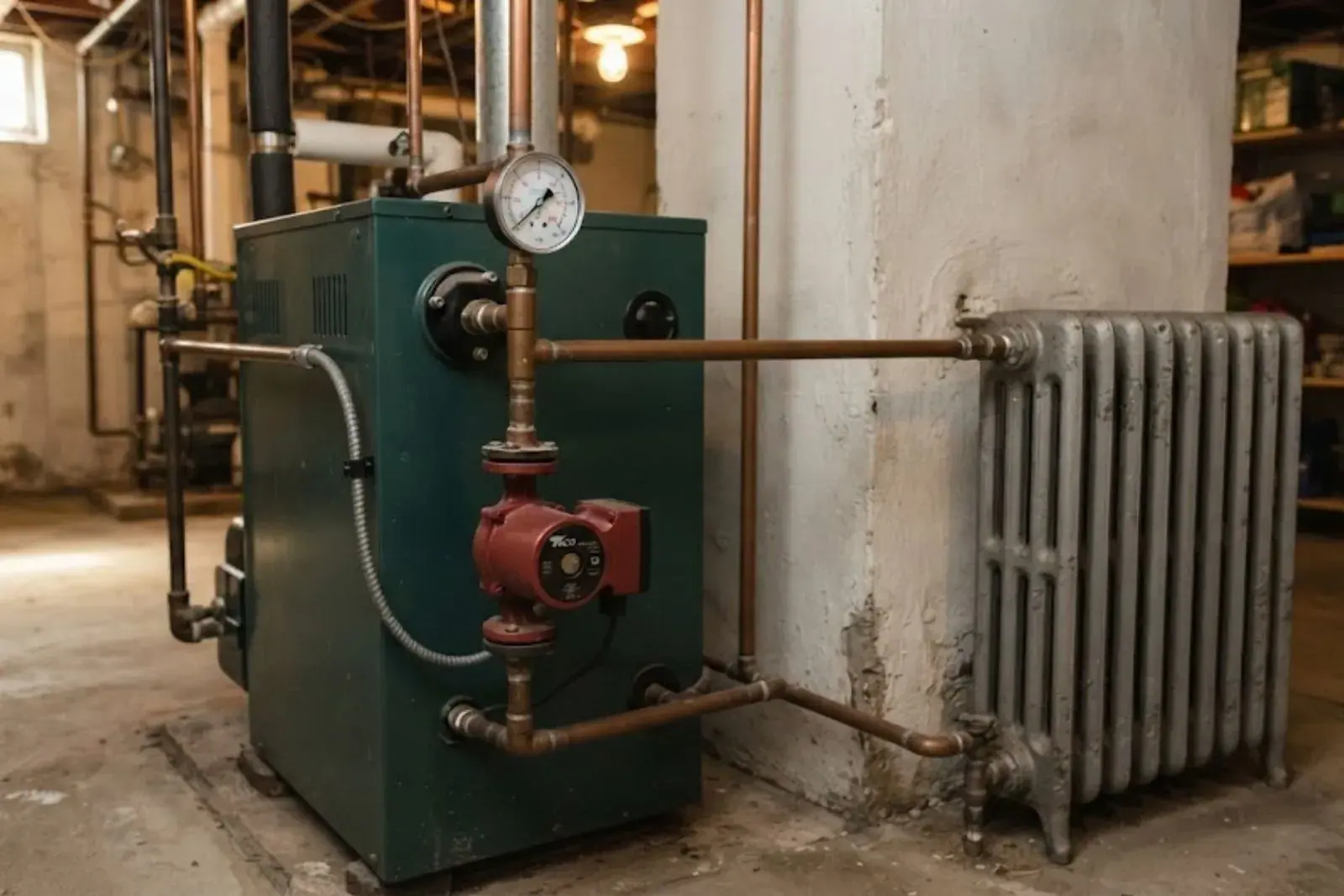
What the boiler is telling you
Hot water heating moves heated water through pipes to radiators, baseboards or floor loops. Most symptoms trace back to water, air or flow.
Radiators that stay cold at the top
Trapped air often blocks the upper part of a radiator or a baseboard run. A plumber purges the loop and checks why air is getting in.
Pressure that keeps falling
A slow drop usually means water is escaping somewhere. Check for damp insulation, drips at valves and stains on the floor below the pipes.
Banging, ticking or gurgling
Noise can point to air, trapped water or loose pipe supports. It is worth a look before it turns into a joint failure.
Water around the base
A weeping fitting, a dripping relief valve or a failed expansion tank connection can all leave water on the floor.
None of these tells you the cause on its own. The plumber confirms with pressure checks and a visual trace of the loop.
How a plumber works through a hydronic loop
A methodical order beats guessing at parts.
Look and listen first
The plumber checks the boiler room, the gauge, nearby valves and the floor for stains, drips and corrosion.
Check pressure and the fill valve
A fill valve that is stuck open or a relief valve that is weeping both change the pressure. Each points to a different repair.
Test the circulator
If the pump is running but a zone is cold, the problem may be a zone valve, air, or a closed isolation valve.
Trace leaks along the loop
Wet insulation, rust trails and mineral crust help find a pinhole. When a leak is hidden behind a wall, leak detection tools locate it before anyone opens drywall.
Repair, refill and bleed
After the repair the loop is refilled, air is purged and the zones are checked one by one.
Ask what was found and what was replaced. A short written note of that is useful the next time the system acts up.
Safety first with fuel-burning heat
A boiler burns gas or oil, so the safety rules are the same as for any fuel-burning appliance.
- Gas smell:Leave the building. Do not use switches or a phone inside. From outside, call Nicor Gas at 800-942-9727 or 911.
- No relighting:Do not try to relight a pilot or reset a boiler that smells of gas. Wait for the utility or a qualified tradesperson.
- Carbon monoxide:Illinois requires alarms within 15 feet of every room used for sleeping. The CPSC adds alarms on every level and outside sleeping areas.
- Vents and flues:Keep them clear. The CPSC also advises an annual professional inspection of the heating system, including flues.
- Active leak:Shut the water feed to the boiler if you can do so safely, keep clear of wet electrical equipment and call.
For a large leak, the 24/7 line at (847) 281-8626 is always answered.
Plumbing side or burner side
Knowing which half of the system is failing speeds up the first call.
| Symptom | Likely side | Who looks first |
|---|---|---|
| Water on the floor | Plumbing | Plumber |
| Pressure dropping | Plumbing | Plumber |
| Radiator cold with warm boiler | Plumbing or air | Plumber |
| Boiler will not fire | Burner or controls | Heating tradesperson |
| Gas smell | Gas | Nicor Gas and 911 |
| Kettling or loud banging | Either | Plumber first, then referral |
A good dispatcher asks these questions on the phone so you are not sent the wrong trade.
Cold house or wet floor?
Call (847) 281-8626 and describe the symptom. If it is urgent, say so at the start.
Replacing or removing an old boiler
Some calls are about getting rid of an old boiler along with a water heater. Disconnecting and capping the piping, the gas and the vent is plumbing work, and removal beyond repairs generally needs a permit in Buffalo Grove.
The village Community Development office, 847-459-2530, handles permits. The plumber will explain whether your job needs one, along with the inspection steps.
Using a boiler for hot water
A combination system that serves both hot water and space heating needs a plumber who reads the rating label and the maker's manual before touching it.
Domestic hot water temperature is a separate issue. The Department of Energy points to 120 degrees Fahrenheit as the recommended household setpoint, so ask the plumber how the heating loop and tap water are separated.
What affects the price of a boiler visit
The price is given before work starts. These factors shape it.
Related plumbing work and where we go
A boiler repair visit sometimes shows a failing water heater next to it or pipes that deserve a look under repiping.
We serve Deerfield, Lincolnshire, Wheeling and Arlington Heights too. Browse the full services list or the service area page.
Where the rules on this page come from
The code references come from the Illinois Plumbing Code (77 Ill. Adm. Code 890), administered by the Illinois Department of Public Health. Carbon monoxide alarm rules come from 430 ILCS 135/10 and CPSC guidance.
Gas safety wording follows Nicor Gas guidance. Permit information comes from the Village of Buffalo Grove Community Development office. Check a plumber's license through the IDPH online verification tool before work begins.
The 150 degree space-heating limit comes from the Illinois Plumbing Code, and the carbon monoxide steps follow federal consumer safety guidelines.
Questions we hear from homeowners
The plumber handles the water side: leaking joints, valves, pumps, expansion tanks and loop piping. Burner and control faults may need a heating tradesperson.
Trapped air is a common cause. A plumber purges the loop and checks why air keeps entering.
Water is leaving the system somewhere, or a valve is releasing it. A pressure test and a trace of the pipes find the spot.
Leave the building and do not use switches or a phone inside. From outside call Nicor Gas at 800-942-9727 or 911.
Repairs generally do not. Replacement or other plumbing work beyond repairs generally does. The plumber will confirm for your job.
Yes, the plumbing disconnects and caps are part of the work. Gas supply and venting work belongs to a licensed gas fitter or heating contractor, and the dispatcher will say so up front.
Call (847) 281-8626 and describe what you see. The plumber explains the price before work starts.