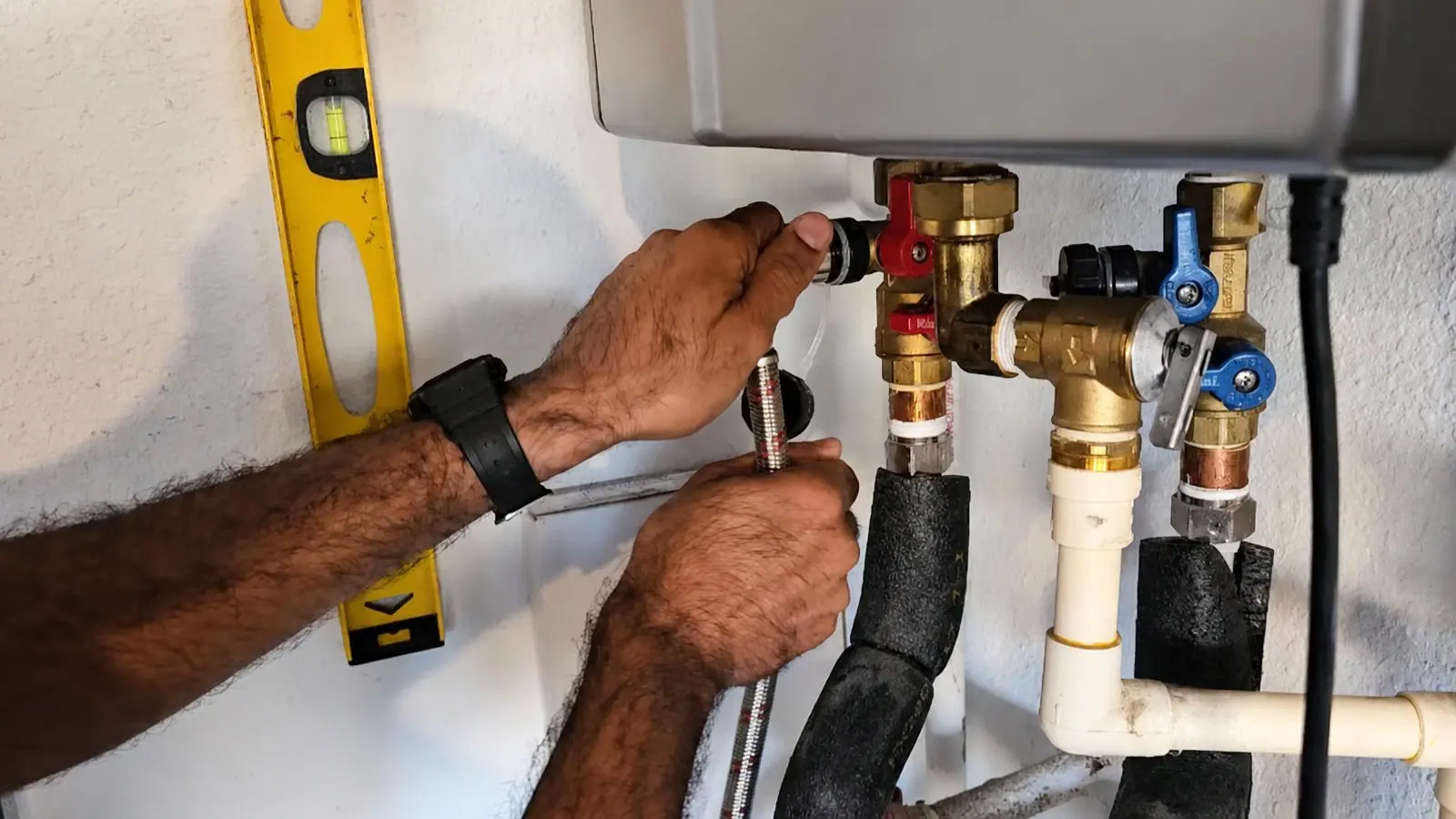
Flush and descale
Flushing and descaling a tankless water heater
Scale builds up inside a tankless heater's heat exchanger when hard water is heated. The USGS notes that heated hard water forms calcium carbonate deposits that can reduce the life of equipment, lower efficiency and narrow pipes. The village's 2022 water quality report lists hardness between 120 and 130 mg/L as calcium carbonate, which is at the edge of moderately hard and hard on the USGS scale, so scale is a real possibility here.
A flush circulates a descaling solution through the unit, then rinses it clear. Manufacturers publish their own steps, valves and intervals, so a plumber follows the manual for your model. We do not give a fixed schedule because it depends on the unit and on your water, and you should ask what the manufacturer recommends.
Common signs that a unit needs attention include a drop in hot water flow, water that runs lukewarm, noise from the heater and an error code on the display. People also ask for a service or tune-up before trouble starts, which is a sensible use of a visit.
What a tankless service visit looks like
The visit follows a clear order so nothing is missed.
Read the display and the history
The plumber checks any codes, asks about symptoms and notes the model and age.
Shut off and isolate
The unit is isolated from water, gas and power as the manufacturer directs.
Flush with descaling solution
A pump circulates solution through the heat exchanger and drains it.
Clean filters and check connections
Inlet screens are cleaned and the gas, vent and water connections are checked.
Rinse, restart and test
The plumber restores service, tests flow and temperature and explains what was found.
Why homeowners call about a tankless unit
These are the situations that most often lead to a call, described in plain words.
A code on the screen
Many tankless heaters flash a code with a beep. Note the code and model before calling, since the manufacturer's manual tells the plumber where to start.
Weak or lukewarm water
Scale, a clogged inlet filter, a flow problem or a vent fault can all reduce output. The plumber narrows it down by testing.
Replacing a tank with one
Some homeowners want to move from a storage tank to an on-demand unit, which overlaps with water heater replacement. That is a planned job with gas, venting and water-flow questions, and it needs a permit.
A unit another company will not service
Not every shop works on every brand. Tell dispatch the make and model so a plumber who handles it is sent.
Leaks
A leaking tankless heater is urgent. Close the water to the unit, switch off power or fuel if safe and call the 24/7 line.
Tankless versus a storage tank in a Buffalo Grove home
Neither type wins in every house. Energy.gov says tankless might be right for small households and that bigger is not always better.
Tankless
- Heats water as it flows, with no standby tank
- Needs the right gas supply, venting and flow
- Needs flushing, especially with hard water
- Installation is a planned job
Storage tank
- Holds a reserve of hot water
- Easier fit in an existing setup
- Can run out at peak demand
- Sized by first hour rating
For the tank side of the story, see water heater installation.
Time for a flush?
Call to book a tankless service visit and get a clear price before work starts.
Installation, gas and permits
Installing a tankless unit usually means checking the gas line size, running a sealed vent and setting the right shutoffs. The Village of Buffalo Grove requires a permit for plumbing work other than maintenance, servicing or repairs. The unit also needs a full-port cold-side shutoff and a fuel gas shutoff according to the village's water heater rules.
Carbon monoxide matters with any fuel-burning appliance. The Consumer Product Safety Commission advises installing to the manufacturer's directions and local code, keeping vents unblocked and having flues checked each year. Illinois requires alarms within 15 feet of every room used for sleeping, under 430 ILCS 135/10.
If you smell gas, leave the building and call Nicor Gas at 800-942-9727 or 911 from outside. Do not try to relight a pilot or tamper with the gas control.
Tankless care at a glance
| Item | What to do | Who does it |
|---|---|---|
| Display code | Note the code and model, check the manual | You, then a plumber if it repeats |
| Descaling flush | Follow the manufacturer's steps for your unit | A plumber |
| Inlet filter | Ask the plumber to clean it during a service | A plumber or you if the manual allows |
| Vent and flue | Keep clear and have it inspected annually | A plumber |
| Water hardness | Check the latest water report or test your tap | You |
If hardness is a recurring issue, a water softener is a topic to raise with the plumber.
What affects the price of tankless work
Prices depend on whether you are flushing, repairing or installing, so we do not publish a number. You get a clear price before work starts.
Sources behind this page
The hardness figures come from the Village of Buffalo Grove's 2022 water quality report, and the explanation of scale comes from the U.S. Geological Survey. Sizing and suitability points come from U.S. Department of Energy guidance.
Permit and shutoff rules come from the Village of Buffalo Grove Community Development department, and carbon monoxide points come from the Consumer Product Safety Commission and Illinois statute 430 ILCS 135/10. The gas emergency steps follow Nicor Gas guidance.
The Illinois Department of Public Health licenses plumbers, and its online verification tool lets you check any plumber before work starts. The Illinois Plumbing Code is 77 Ill. Adm. Code 890.
Questions we hear from homeowners
It depends on the model and your water, so follow the manufacturer's guidance for your unit. The village's 2022 report lists hardness between 120 and 130 mg/L, so scale is worth watching.
A plumber can read your manual and suggest a schedule.
A descaling solution is circulated through the heat exchanger and then rinsed out, following the manufacturer's steps.
The plumber also checks filters and connections and tests the flow when the unit is back on.
Write down the code and the model, and check the manual. Many codes point to a vent, flow, ignition or sensor issue.
If it keeps returning or you have no hot water, call and give dispatch the details.
Tell dispatch the make and model when you call so a plumber who handles it is sent.
If your unit is beyond service, the plumber explains the replacement options.
Energy.gov says tankless might be right for small households. It depends on your gas supply, venting and hot water habits.
A plumber can assess the home and discuss it before you commit.
The Village of Buffalo Grove requires a permit for plumbing work other than maintenance, servicing or repairs, and a water heater replacement needs one.
Your plumber should arrange the permit and inspection, so ask before work starts.
Close the water to the unit, switch off power or fuel if it is safe, and call the 24/7 line at (847) 281-8626.
If you smell gas, leave the building and call Nicor Gas at 800-942-9727 or 911 from outside.