What to do if you have an active leak right now
Water damage grows by the minute, so the first ten minutes matter more than anything a plumber does later. These steps are safe for any homeowner and cost nothing.
While you wait for a plumber
- Shut off the main valve.It is usually on the inlet pipe near the water meter or where the line enters the basement or utility room. Turn it clockwise until it stops.
- Keep power away from water.If water is dripping through a ceiling light, near outlets or around an appliance, switch off that circuit at the panel only if you can reach it without stepping in water.
- Catch and redirect.Put a bucket under a drip, stay out from under a bulging ceiling stain, which may hold a lot of water near wiring, and move furniture and rugs out of the wet zone.
- Open a low faucet.After the main is off, open the lowest tap in the house to drain the lines and take pressure off the leak.
- Photograph the damage.Take clear pictures before you clean up. Your insurer will ask for them, and coverage for sudden water damage varies by policy.
If you smell gas at any point, leave the building, do not touch switches or use a phone inside, and call Nicor Gas at 800-942-9727 or 911 from outside.
Symptom one
Meter still running or the water bill jumped
This is the most common way a hidden leak announces itself. Shut off every faucet, appliance and ice maker, then look at the meter. If the small dial or triangle keeps moving with nothing running, water is escaping somewhere between the meter and a fixture.
A quick split test narrows it down. Close the main valve inside the house and watch the meter again. If it still turns, the loss is on the buried line between the meter and your wall. If it stops, the leak is inside the house or in a fixture such as a toilet flapper.
Toilets are the usual suspect inside. Put a few drops of food dye in the tank, wait ten minutes without flushing, and see whether color reaches the bowl. EPA WaterSense recommends this test, along with checking for silent leaks at least once a year.
The village owns the meter and the mains, and the homeowner owns everything on the house side. If a bill looks wrong, ask the village utility office about your reading history, then call (847) 281-8626 to have the private side checked. Pressure that sits much above the normal 45 to 60 psi range also raises leak risk, which is worth a gauge reading on an outdoor spigot.
Meter spinning with everything off?
Call (847) 281-8626 and describe what the dial is doing, and we will send a plumber to trace the loss.
Symptom two
Stains on the ceiling or damp patches on a wall
A brown ring on a ceiling, bubbling paint or a soft spot in drywall means water has been present for a while. The stain is rarely under the leak. Water travels along joists, pipes and the back of drywall before it shows, so the visible mark can sit several feet from the source.
The first question is whether the water is clear or discolored, and whether it appears only after someone uses a shower, a dishwasher or the washing machine. A ceiling stain that grows when the upstairs bath runs points to a drain, a trap or a tub overflow. A stain that grows on its own points to a pressurized supply line.
Plumbers use a moisture meter to map the wet area, then a thermal camera to see the temperature difference where a pipe is wetting insulation. Pressure testing of the suspect line confirms it before anyone cuts. Often a hand-sized access opening is enough, rather than a torn-out ceiling.
Roof and window leaks look the same from below. If the stain only grows after rain, a roofer or window installer may be the right call, and a plumber can rule plumbing in or out.
Where each symptom usually leads
Use this as a starting guide only. A real diagnosis comes from testing, not from the symptom alone.
| What you notice | Most likely area | First step |
|---|---|---|
| Meter moves with all water off | Buried service line or a running toilet | Close the main valve and watch the meter |
| Warm spot on a floor | Hot water line under or inside a slab | Turn off the water heater supply and call |
| Ceiling stain growing after showers | Tub, trap or drain above | Stop using that bath and call |
| Stain growing with no use | Pressurized supply pipe in the wall or ceiling | Shut off the main and call |
| Musty crawlspace or damp joists | Supply or drain line under the house | Photograph it and call |
| Soggy lawn strip with no rain | Buried line or sprinkler zone | Close the main valve and call |
| Low pressure plus a high bill | Leak ahead of the fixtures | Test the pressure and call |
Soft ground, foam, hissing or a sudden pressure drop all raise the urgency. Call the 24/7 line rather than waiting for the next business day.
Symptom three
A warm floor or a hot spot that points to the slab
Some of the earliest homes in the village were built as single-story houses, and many had no basement. That means some water lines run through or under a concrete floor, where they are hard to see or reach. A hot water line leaking under a slab can warm the floor above it, run the water heater more often, and push the gas or electric bill up.
Other clues include the sound of running water at night, damp carpet along a wall with no source, a musty smell, or a hot water tap that takes much longer to deliver heat than it used to. If you notice any of these, shut off the water heater and the main valve, then call.
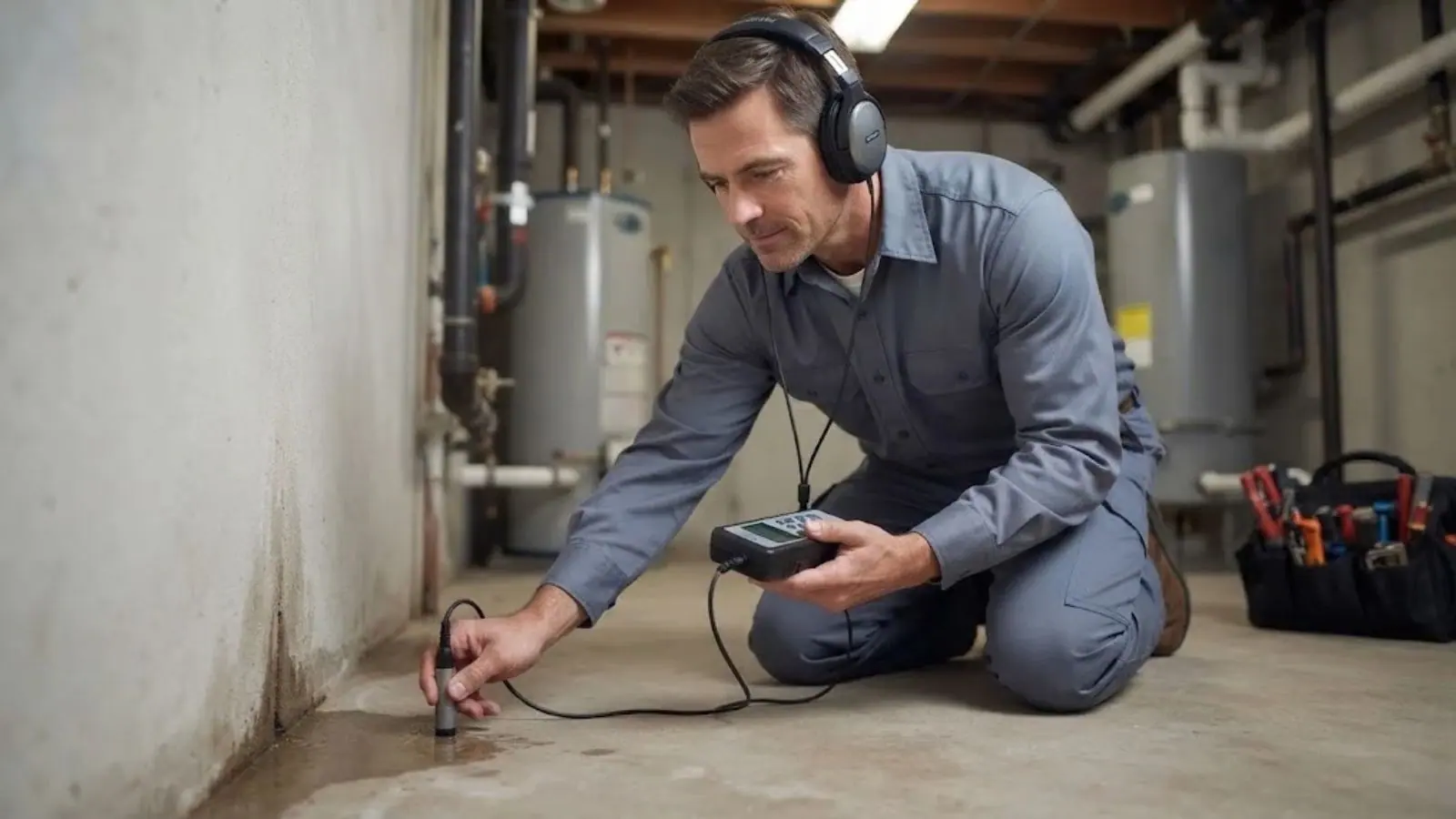
Locating a slab leak is a tracing job. A plumber isolates each line and pressure tests it, then uses acoustic listening, which picks up the sound of water escaping a pressurized pipe, and thermal imaging, which shows the warm path. The exact spot is marked on the floor before any concrete is cut.
The repair is often a local patch or a reroute of the line through the attic or walls. When the pipe is badly worn throughout, replacing the run is sometimes the better long-term option, and a plumber should explain both before work starts.
Symptom four
Leaks under the house, in a crawlspace or behind finished walls
Where a house has a crawlspace or an unfinished basement ceiling, leaks often show as damp insulation, drips from joists, rust streaks on fittings, or a musty smell that gets worse in summer. These spaces hide slow weeping joints for months, and mold can start well before you see water.
A plumber checks supply joints, drain connections, shutoff valves and the underside of tubs and showers. A pressure test shows whether a supply line loses pressure, and a camera or mirror helps in tight spaces. Wet insulation should be taken out and dried, because it holds moisture against wood.
Frozen or cracked pipes also show up in unheated crawlspaces after hard cold snaps. The Cook County hazard plan lists extreme cold events in 2019, 2021 and 2022, so any pipe on an exterior wall or in an unheated space deserves a look after a deep freeze.
If you see standing water or sagging insulation, shut off the main valve and call. If you cannot reach the space safely, do not crawl in. A plumber can do the inspection.
Symptom five
A buried line leaking between the meter and the house
The pipe that brings water from the curb stop to your house is the homeowner's responsibility, along with the shutoff on the private side. When it leaks, you may see a wet or unusually green patch, a sunken strip of lawn, water pooling in the yard after dry weather, or a meter that runs with the house shut off.
Locating it takes patience. A plumber closes the main valve and watches the meter, then pressure tests the line to confirm the loss. Acoustic listening on the curb stop and the entry point narrows where the sound is loudest, and tracer gas, a harmless gas mix pushed into the emptied line, can be sniffed from the surface to pinpoint a small escape.
Before anyone digs, JULIE (811) must be called at least 3 days ahead so the utility lines are marked. Repairing the service line usually needs an emergency repair permit with the village, applied for within 24 hours, plus an underground inspection with 48 hours' notice. The plumber handles the paperwork, and you can read more on our water service line repair page.
Smaller clusters
Yard, meter box and sprinkler leaks
A meter box that holds standing water, or a wet spot near the curb, can be a leaking fitting on the private side of the meter. Look inside the lid with a flashlight and check whether water is dripping from a connection or simply collecting from rain.
Irrigation systems leak in different ways from house plumbing. A broken head, a cracked valve body or a crushed lateral shows up as a soggy zone, a geyser or low coverage. Turn off the irrigation zone valves and watch the house meter. If it stops moving, the sprinkler system is the source, and a landscaper or irrigation contractor may be the right fix.
Pools and spas follow the same logic. A bucket test, where the water level in a bucket is compared with the pool over a day, can separate evaporation from a true leak. Plumbing lines to the equipment pad can then be pressure tested.
What the tools do and when they are used
A plumber picks the method from the symptom. None of these is a guess, and several are often used together to confirm a result.
| Method | What it does | Best for |
|---|---|---|
| Acoustic listening | Amplifies the sound of water escaping a pressurized pipe | Slab and buried line leaks |
| Thermal imaging | Shows temperature differences on walls, ceilings and floors | Hot water leaks, wet insulation |
| Tracer gas | Pushes a harmless gas mix into an emptied pipe and detects where it escapes | Small, hard-to-hear leaks |
| Pressure testing | Isolates a section and watches a gauge for a drop | Confirming which line is losing water |
| Moisture mapping | Measures dampness across a surface | Mapping how far water has spread |
Camera inspection of drain lines is a separate step, used when the water is leaving through a drain rather than a supply pipe. Our sewer inspection page explains that process.
What drives the cost of finding and fixing a leak
No two leaks cost the same, and a flat number over the phone would be a guess. You get a clear price before work starts, and it should separate the finding step from the repair.
Standards
Where the facts and rules on this page come from
The service line ownership, emergency repair permit timing and underground inspection steps come from the Village of Buffalo Grove Community Development and Public Works pages. Plumbing in Illinois is licensed by the Illinois Department of Public Health, and the work follows the Illinois Plumbing Code (77 Ill. Adm. Code 890).
The 3-day notice before digging comes from JULIE (811), the state one-call service. The pressure range and the toilet dye test come from EPA WaterSense home maintenance guidance, and the cold-weather dates come from the Cook County hazard mitigation plan.
To check a plumber, use the license verification tool on the IDPH plumbing page and look up the name or business before work begins.
Questions we hear from homeowners
Yes. The line at (847) 281-8626 is answered around the clock, and an active leak, a ceiling stain growing fast or a meter that will not stop moving is treated as urgent. While you wait, shut off the main valve and open the lowest tap to drain the lines.
Turn off everything that uses water, then watch the meter dial or low-flow indicator. If it keeps moving, water is escaping. Close the main valve inside the house and look again to learn whether the loss is on the buried line or inside the home.
A leaking toilet flapper, a dripping fixture or a hidden pipe leak can add up over a billing period. Check the meter, run the toilet dye test, and ask the village utility office about your usage history. If the numbers do not add up, a plumber can test the private side.
Often yes. Moisture mapping, thermal imaging, acoustic listening and pressure testing narrow a leak to a small area. Cutting is limited to the spot that has been confirmed.
The cost depends on where the leak is, how much access is needed, how many methods are required and whether the repair is a patch or a replacement. The price is explained before work starts, and the finding step should be priced separately from the fix.
No. In-floor heat, ducts or sunlight can warm a floor. A warm spot with a rising gas bill, the sound of running water or a hot tap that is slow to heat is worth a call.
In Buffalo Grove the village owns the mains and the meter, and the homeowner owns the service line and the shutoff on the private side. A plumber can test it, and repair work needs a permit and a JULIE locate.
Yes, the same methods apply. See the commercial plumbing page for details on larger systems.