First question
Which kind of water is in your basement?
The fix depends entirely on the source. Groundwater that rises in a pit is handled by a sump pump. Rainwater that runs toward the house is usually a grading and downspout issue. Sewage that comes up through a floor drain is a drain-system problem, and a leaking pipe is something else again.
A plumber can tell groundwater from sewer water from a supply leak (see leak detection for the last one), and that is the part of waterproofing this page covers. A wall that seeps after storms may be a structural matter that a plumber does not assess, and you may need another trade for it.
A quick way to describe it on the call
Say where the water appears, when it shows up, and whether it smells like sewage. Those three answers shape the visit.
The plumbing tools used to keep a basement dry
These are the components a plumber works with.
Sump pit and pump
The pit collects groundwater and the pump sends it out. A properly working pump, with a check valve and a good discharge path, is the backbone of most dry basements. See sump pump installation and repair for the details.
Drain tile outlets
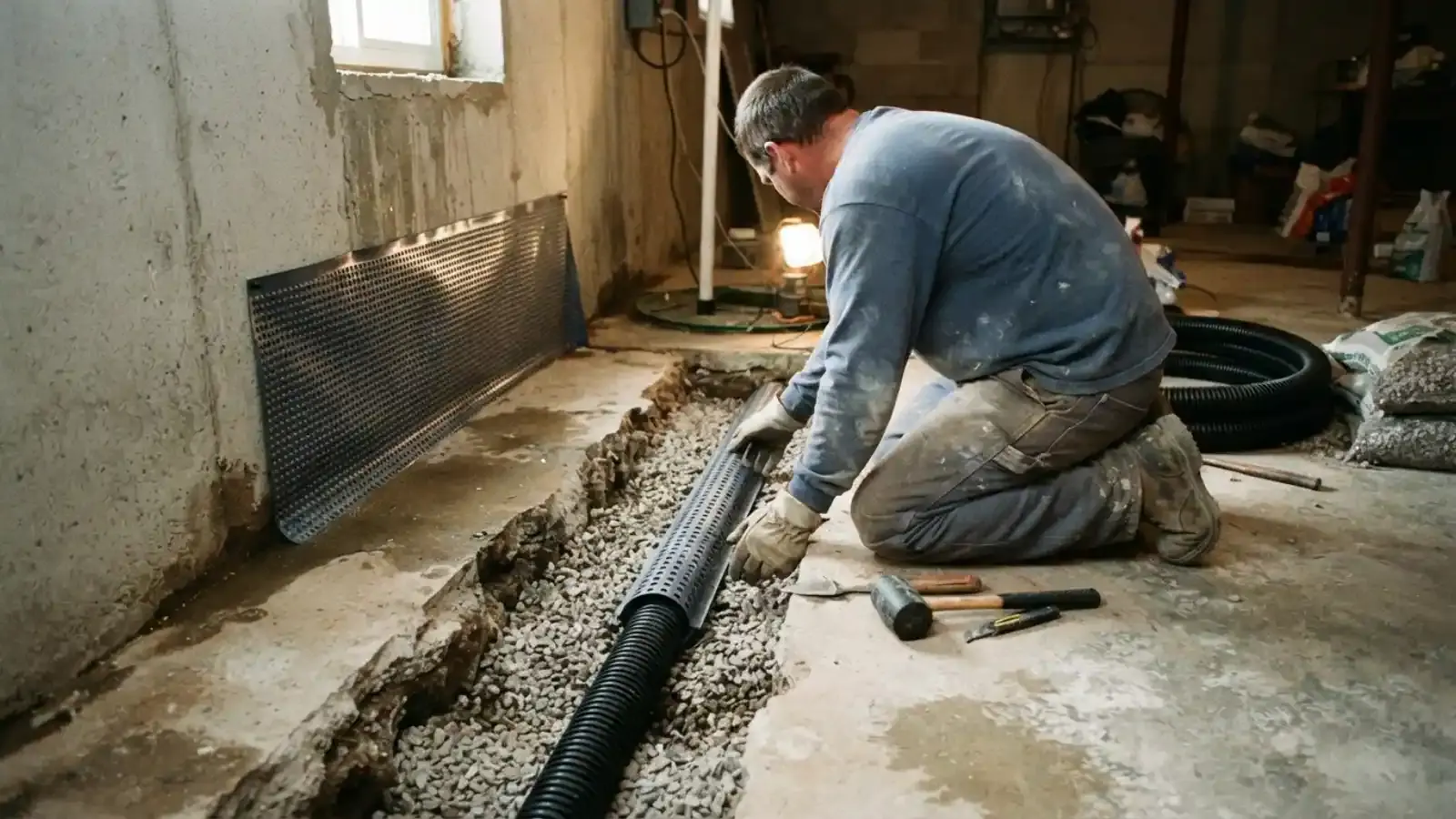
Perimeter drain tile carries groundwater toward the pit. A plumber can check that the pit receives that flow and that the pump keeps up. Installing or replacing the tile itself is excavation work, which may need other trades.
Discharge lines
The pipe from the pump must carry water away from the house. A crushed, frozen or poorly pitched line can defeat even a strong pump.
Check valves and backwater valves
FEMA describes backflow valves as gate-like devices on pipes leaving the house that stop sewage coming back. They need cleanable access, and you should check local permission before installing one.
Floor drains
A basement floor drain connects to the sewer. If it backs up in heavy rain, the sewer is overloaded or blocked, and a check valve or an overhead sewer may be discussed.
Groundwater problem or sewer problem
The two look alike on the floor but call for different fixes.
Groundwater signs
- Water appears at the pit or along the wall base
- Shows up after rain or snowmelt
- Smells like damp soil
- Often a sump or drain tile matter
Sewer backup signs
- Water rises at a floor drain or toilet
- Gurgling before the water appears
- Smells like sewage
- Treat as contaminated and call right away
If sewage is involved, keep children and pets away and avoid touching the water with bare skin. The CDC advises gloves, boots and goggles for cleanup.
Matching the symptom to the plumbing fix
This is where a plumber helps and where a different contractor is needed.
| What you see | Plumbing solution | Other help may be needed |
|---|---|---|
| Pit overflows in storms | Larger pump, battery backup, better discharge | None if the pump is the limit |
| Pump runs but pit refills | Check valve, discharge line repair | Grading or downspout changes |
| Floor drain backs up | Line clearing, check valve, inspection | Village Public Works if main is involved |
| Damp spots on walls | Rule out a pipe leak | A foundation contractor for seepage |
| Wet floor with no storm | Leak detection on supply or drain lines | None if a pipe is found |
A plumber confirms what is plumbing before proposing work.
Want a basement protection plan?
Call (847) 281-8626 to talk through your situation. The 24/7 line is answered any hour if water is coming in now.
Sewer backups and what the village says
For a sewer backup, the Village of Buffalo Grove asks you to call Public Works first, at 847-459-2545 during business hours, or the police non-emergency line at 847-459-2560 after hours. Public Works does not clear or televise private lines, and the homeowner owns the sewer service line to the main.
That means a plumber is the next call. A camera inspection, described on our sewer inspection page, can show whether the problem is on your side. MWRD lists blocked laterals, heavy rain and limited system capacity as common causes, and it recommends a check valve or overhead sewer installed by a qualified plumber.
Flood history and what to do with it
Buffalo Creek is the village's main flood source, and Cook County's hazard plan lists federal declarations in 1972, 1973, 1986, 1987, 1993 and 2013, with state declarations in April 2013 and July 2017. Many early homes were single-story and some had no basement, so basements in later houses sit in ground that has seen wet years.
For you, that suggests treating the pump and discharge as essential equipment, testing it each year, and having a backup plan for power failures.
How the cost of plumbing-side waterproofing is set
Jobs range from a pump swap to a full pit and backup package, so a flat figure would not be honest. The price is given before work starts.
What a planned visit looks like
This is the usual order of a waterproofing consultation.
Describe the water
You tell the dispatcher where, when and what it smells like.
Look at the equipment
The plumber checks the pit, pump, float, check valve and discharge pipe.
Test the system
Water is poured into the pit to confirm it runs, and drains may be camera-checked.
Explain options and price
You hear what is needed, in what order, and what it will cost before anything starts.
Where the guidance on this page comes from
The sewer backup remedies come from the MWRD and FEMA basement flood guidance, the cleanup advice from the CDC, and the sump and discharge details from the Village of Buffalo Grove. The flood history is from the Cook County hazard mitigation plan. Plumbing work follows the Illinois Plumbing Code (Title 77, Part 890).
Before you dig for any outdoor line, contact JULIE at 811 at least three days ahead. Plumbers are licensed by the Illinois Department of Public Health, and you can verify a license on its website.
The Illinois Plumbing Code defines a sump pump as a pump for storm, subsoil and clear water, and that definition is the standard behind how this page separates sump work from sewer work.
Questions we hear from homeowners
Part of it is. Sump pumps, discharge lines, floor drains and check valves are plumbing. Structural cracks and foundation seepage are not, and a plumber will say so.
Groundwater tends to appear at the pit or the wall base after rain. Sewer water rises at drains and toilets and smells like sewage.
MWRD and FEMA point to a check valve or overhead sewer installed by a qualified plumber, a clean lateral and downspouts directed away from the foundation.
The village asks you to call Public Works first, or the police non-emergency line after hours. Public Works does not clear private lines, so a plumber is the next step.
The village requires a permit for plumbing work beyond maintenance, servicing or repairs. Ask the plumber to confirm it for your job.
Yes. A battery backup keeps the pit pumping during an outage or if the main pump fails.
Call (847) 281-8626, which is answered at all hours. Move belongings up and stay clear of standing water near electrical items.