Signs the sewer line itself needs repair
A single clog is one thing, and a damaged pipe is another. These patterns point toward the second.
Backups that return
A line that has been cleared and clogs again within months is often being fed by roots, a crack or a sag. Cleaning treats the symptom, and repair treats the cause.
Sewer smell indoors or in the yard
A steady odor in a bathroom or near a corner of the yard can come from a broken joint or a cracked pipe. A dry floor drain trap can also cause smell, so a plumber checks that first.
Gurgling or several fixtures slow at once
A main line that is partly blocked or partly collapsed pushes air back through fixtures. Toilets that gurgle when another drain runs are a common early sign.
Soggy patch or sunken ground
Wet lawn without rain, or a depression above the pipe, can mean sewage is escaping into the soil. That needs a camera and sometimes a locator.
A drain line that has sagged
When a section settles, water collects in the dip and solids settle there. A cable clears it for a while, and the dip refills.
What to do if sewage is backing up into the house right now
A backup is both a plumbing problem and a health problem. Handle it in this order.
Until the plumber arrives
- Stop running water.No flushing, laundry, dishwasher or showers. Every drain in the house empties into the same line.
- Turn off power to wet areas only if you can do it safely.If the panel is in a flooded basement, stay out and tell the dispatcher. Do not stand in water near electrical equipment.
- Protect your health.Sewage-contaminated water can cause skin infection and stomach illness. Wear rubber boots and gloves, keep children and pets out, and wash up with soap afterward.
- Call Public Works about the street main.In business hours the number is 847-459-2545. After hours, the village directs residents to the police non-emergency line at 847-459-2560.
- Leave if you smell gas.Sewer gas and natural gas are not the same. If you smell gas, go outside and call Nicor Gas at 800-942-9727 or 911.
Backup
Sewer backup: what is happening in the pipe
A sewer backup happens when waste cannot flow out of the house as fast as it flows in. The cause can be on your side of the property line, in the street main, or both. Heavy rain can overwhelm the public system, and a blocked or damaged private line can fail on a dry day.
That difference matters for who fixes it. The Metropolitan Water Reclamation District notes that backups often come from limited sewer capacity, a blocked or damaged lateral, or intense rain. In Buffalo Grove, the village treats the private sewer line as the homeowner's, and Public Works does not cut roots or camera private lines.
If your neighbors are not having problems and the backup comes with clogs, roots or a smell, the damage is likely on your line. Call Public Works first so it can check the main, then call the plumber. If a backup follows a storm, a check valve or an overhead sewer can reduce the chance of a repeat, and a plumber can explain whether either fits the house.
Main line
The main sewer line: from cleanout to street
The main sewer line runs from the house to the village sewer in the street. Everything in the house drains into it, so a problem here shows up in the lowest fixtures first. A basement floor drain, a laundry tub or a basement shower are the usual places the water appears.
Plumbers begin by finding the cleanout, a capped pipe that gives access to the line. If there is no cleanout, access may mean pulling a toilet or working through a roof vent. The camera then travels from that point toward the street, recording footage and noting the distance to each problem.
A sewer line of any age can crack, let roots in or separate at a joint. That is general guidance, not a promise about any one house, and the camera is what tells the truth. If the line is clean and sound, you will know and can stop worrying.
Cleaning is often the first step before repair, and the same crews handle ordinary drain clogs. A hydro jetting pass can clear a line enough to see its walls clearly, and a full sewer cleaning may be all that a sound pipe needs.
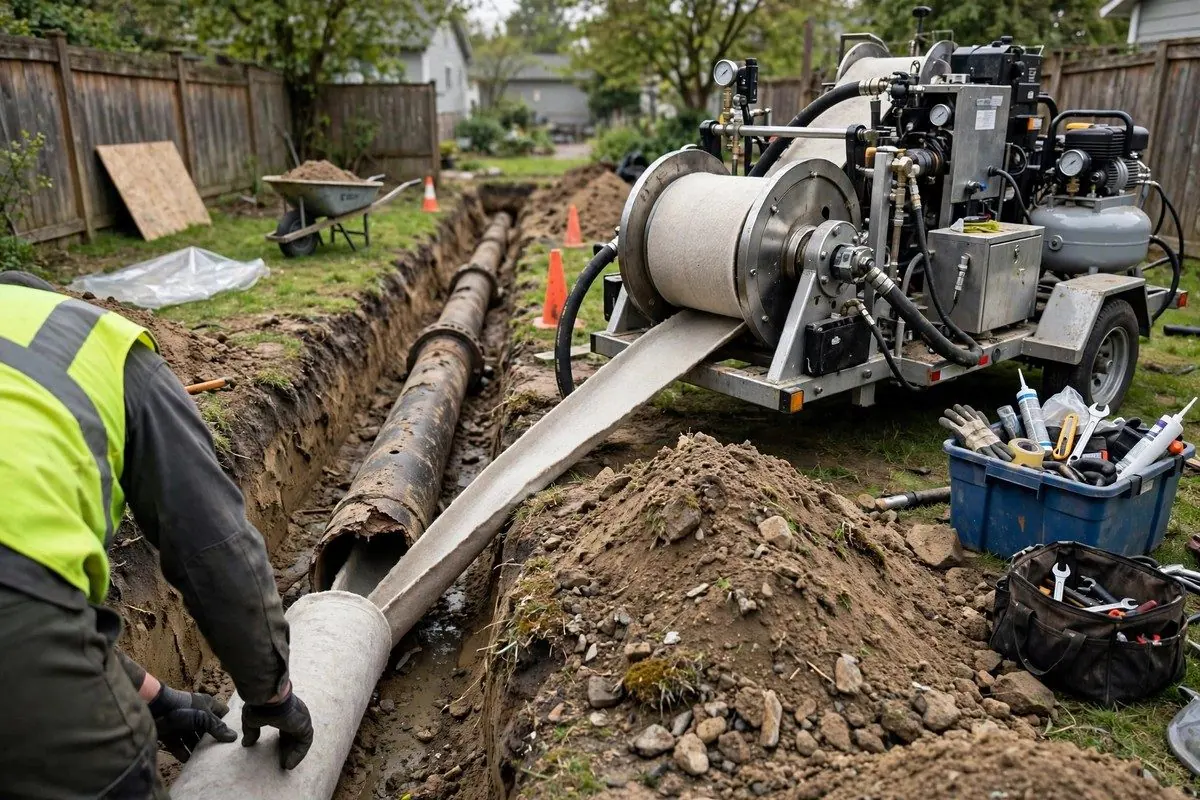
Dig-and-replace or trenchless: how repair methods differ
Which method fits depends on the pipe, the depth, what sits above it and what the camera showed.
Open-trench repair
- Digs down to the pipe and replaces the damaged length
- Works for badly collapsed or offset sections
- Lets the plumber correct the slope and replace fittings
- Disturbs lawn, driveway or landscaping above the pipe
- Needs a call to 811 before any digging
Trenchless options
- Lining or bursting methods work from small access points
- Less surface damage in most cases
- Not suited to every pipe, such as one that is badly collapsed or bellied
- A camera and cleaning pass come first
- Some callers ask about lining pipe under a slab, and the plumber confirms if it fits after a camera look
Ask the plumber to show the footage and explain why one method suits your pipe better than the other. A repair for a single cracked joint is a very different job from a full replacement to the street.
Sewer smell or repeat backups?
Call (847) 281-8626 and a plumber will arrange a camera look at the line.
Roots
Roots, cracks and sags: the three usual repair causes
Roots enter through tiny openings at joints and grow into large masses inside the pipe. A cutter can clear them, but if the entry point stays open they return. Spot repair or replacement of the affected section is the lasting fix. Some owners also ask about ways to keep roots out, and the plumber can advise what suits the pipe.
Cracks form from ground movement, heavy loads above the pipe, age or poor joints. A crack that leaks lets sewage into the soil and lets groundwater into the line. Small cracks can sometimes be lined, and larger ones need section replacement.
A sag, sometimes called a belly, is a low spot where the pipe has settled. Water pools in it and solids stay behind. A cable clears the buildup, but the dip refills, so repair means lifting or replacing that run so the pipe slopes evenly again.
How a sewer repair job usually goes
The order is the same on most jobs, though the details vary with the pipe.
Call and describe the symptoms
Tell the dispatcher what is backing up, which fixtures are affected and how long it has been going on.
Clear the line enough to see
The plumber opens the line with a cable or a jetter so the camera can travel the full run.
Run the camera
The footage shows the distance and depth of each problem, and a locator can mark the spot above ground.
Review options and price
The plumber explains whether cleaning, spot repair, lining or replacement fits, with the price stated before work starts.
Permit and utility locate
Sewer repairs in Buffalo Grove involve the village, and any dig needs a JULIE call at least 3 days ahead.
Repair, inspect and restore
After the repair, the line is tested and, where required, inspected before the trench is closed.
Permits
Permits and inspections for sewer work in Buffalo Grove
The Village of Buffalo Grove requires a permit for plumbing work other than maintenance, servicing or repairs, and sewer service repairs have their own rules. For an emergency sewer or water service repair, the village asks that the permit be applied for within 24 hours. Underground work needs an inspection, with 48 hours' notice to the village.
Work in the public right-of-way may need a bond. Community Development handles permits at 847-459-2530, and it is worth asking your plumber who is pulling the permit and when the inspection is scheduled.
Before any digging, call 811 or JULIE at least 3 days ahead so buried utilities are marked. The service is free, and it applies even to small projects.
What shapes the price of a sewer line repair
The price is explained before work starts. Here are the main pieces.
Other help for drains and sewers
A repair often sits next to cleaning, camera work or backup protection.
Basement waterproofing
Controlling groundwater and drainage around the foundation.
Water service line repair
For the supply line from the main to the house.
Sources
What this page relies on
Ownership, backup contacts and permit steps come from the Village of Buffalo Grove Sewer and Drainage page and from Community Development's pages on permits. The backup causes and remedies draw on the Metropolitan Water Reclamation District's sewer guide and on FEMA's basement flooding guidance, and the health notes follow the CDC.
Plumbers in Illinois are licensed by the Illinois Department of Public Health under the Illinois Plumbing License Law, and the Illinois Plumbing Code (77 Ill. Adm. Code 890) is the statewide standard. Before work starts, you can verify a plumber's license with IDPH's online lookup.
The 811 guidance comes from JULIE.
Questions we hear from homeowners
Yes. The line at (847) 281-8626 is answered around the clock, and a plumber can be sent for a sewage backup at night or on a weekend. The first step is usually to open the line and look with a camera, then explain the repair and price.
In Buffalo Grove the private sewer service line from the house to the main is the homeowner's. Public Works handles the village mains and does not cut roots or camera private lines. Call Public Works first about a backup, then a plumber.
A single slow drain that clears with a cable is likely a clog. Repeat backups, a sewer smell, soggy ground or a cable that stops at the same spot suggest a damaged pipe. A camera run settles it.
Sometimes. Lining and bursting methods work from small access points on pipes that suit them. A badly collapsed or bellied pipe may still need an open trench, and the camera decides.
It depends on the pipe, its condition and where it runs. Ask the plumber after a camera look whether lining fits that line or whether another approach does.
The village has rules for sewer service repairs, including an emergency repair permit applied for within 24 hours and an underground inspection with 48 hours' notice. Community Development at 847-459-2530 can confirm the steps for your job.
It varies by policy. FEMA notes that most homeowner policies do not cover flooding but may cover limited sewer backup damage. Ask your insurer what yours includes.