What to do if a drain is backing up right now
These steps limit the mess and the damage until someone arrives.
While you wait for the plumber
- Stop the water.Do not run the washer, dishwasher or shower. Every gallon you send down has to go somewhere, and a blocked line sends it back up the lowest opening.
- Skip the chemical bottle.Harsh liquid openers can sit in a standing pipe and burn skin when the trap is opened. A plumber has to work around whatever you pour in.
- Keep power away from water.If water is spreading toward outlets, a power strip or a basement freezer, leave the circuit alone and stay out of the wet area.
- Treat sewage as unsafe.Water that came up from a floor drain can carry germs. Wear rubber gloves and boots, keep children and pets out, and wash your hands with soap afterward.
- Smell gas? Leave.A rotten-egg smell is a different emergency. Get outside, then call Nicor Gas at 800-942-9727 or 911 from outside the building.
Which drain is slow tells us where the clog is
Before any cable goes in, a plumber reads the pattern of what is slow and what is not. The pattern points to a spot in the pipe.
One fixture only
The blockage is in that fixture's trap or the short branch behind it. Hair, soap, food and wipes are the usual causes, and a hand-sized cable normally reaches it.
Several fixtures on one floor
Two or three drains that slow down together usually share a branch line. The clog sits past the point where those pipes join.
Lowest drain gurgles or overflows first
Water finds the lowest opening, so a basement floor drain or shower that backs up while upstairs fixtures still work often means the main line is the problem.
Toilet gurgles when something else drains
Air and water are fighting for the same path. That gurgle is a common early sign of a partial main line blockage, and it tends to get worse.
Kitchen sinks
Kitchen sink clogs: grease, food and the dishwasher line
Kitchen sinks clog differently from bathroom drains. Cooking grease cools inside the pipe and coats the walls, then rice, coffee grounds and vegetable peels catch on that coating. The sink drains a little slower each week until it stops, and callers often say it backs up into the other side of a double bowl.
If the dishwasher drains into the same line, dirty water may show up in the sink when the dishwasher runs. That is a sign the blockage is past the point where the dishwasher hose joins, so cleaning only the strainer will not fix it.
A plumber pulls the trap first to check for a packed plug, then runs a cable through the wall line to break up the grease and food. If the sink has a garbage disposal, the disposal may need to be set aside to reach the line, and the plumber will tell you before taking it apart. A garbage disposal that hums or jams is a separate repair, but the two problems often show up together.
To slow the next clog, wipe pans before washing, use the strainer, and keep grease out of the sink. Hot water alone does not carry grease far enough down the line to matter.
Tools
Snaking versus cabling: what each tool reaches
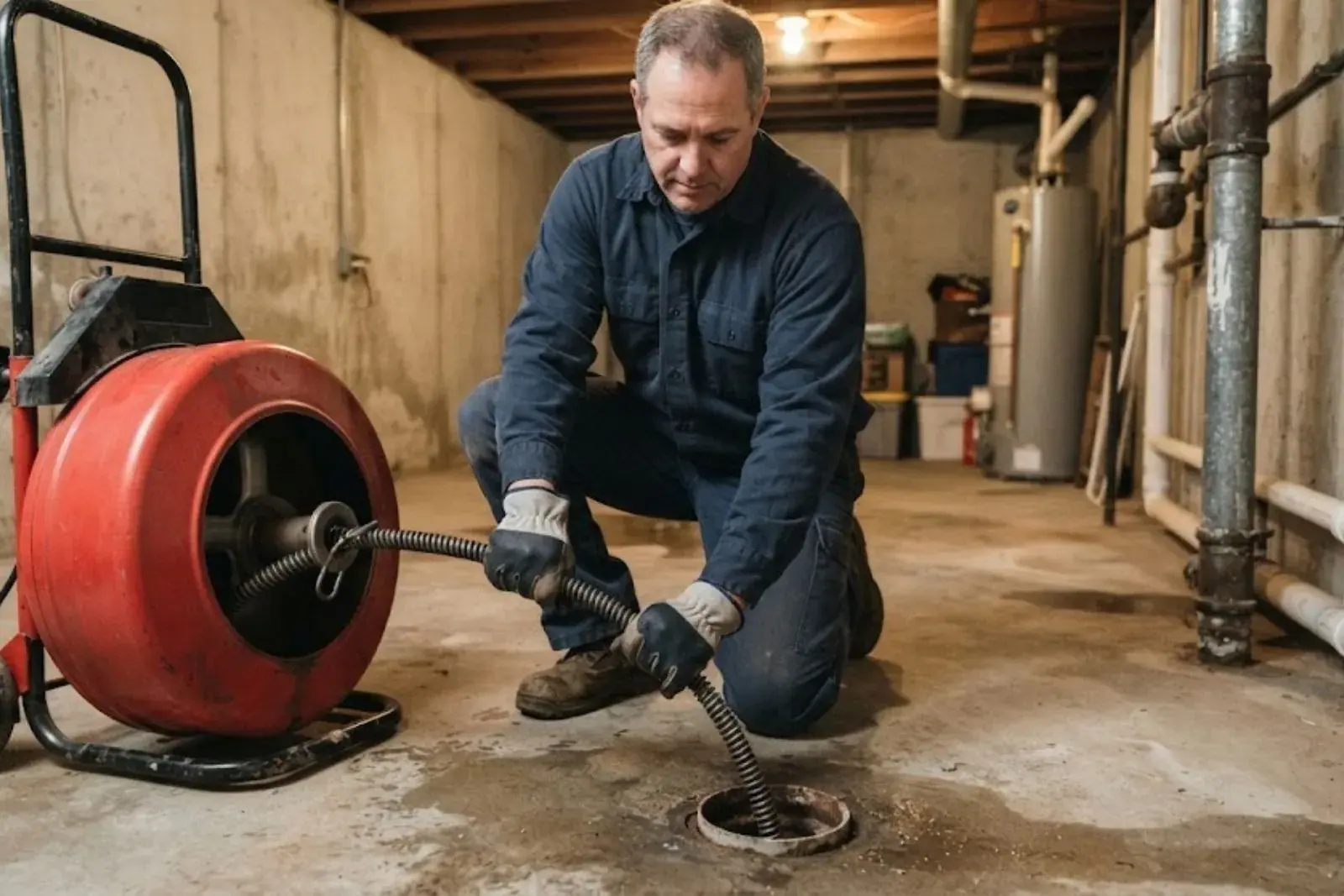
People use the words snake and cable for the same thing, but the tools differ in size and power. A hand-crank snake is a thin steel coil that clears a sink trap or a short branch. A drum machine uses a thicker cable on a motor, which lets it spin through hair, soap and light roots in lines up to the main.
The cutting head on the end matters as much as the cable. A plain tip pokes a hole through a soft clog, while a spring or blade head scrapes the pipe wall so the opening stays wide. Callers often report that a clog came back within weeks, and that usually means the first pass poked a hole but never cleaned the walls.
When a cable stops short, the plumber notes how far it went and how it felt. A solid stop could be a collapsed section, a bad joint or a heavy mass of roots, and that is when a camera is the next step. A look inside costs little compared with guessing, which is why a sewer camera inspection often follows a cable that will not pass.
Which method fits which clog
Match the tool to the problem and the clog is less likely to return. This is the general rule plumbers follow.
| Situation | Usual tool | Why it fits |
|---|---|---|
| Slow bathroom sink or tub | Hand snake or small drum cable | Hair and soap sit close to the opening |
| Kitchen line packed with grease | Drum cable with a scraping head | The pipe wall needs scraping, not just a hole |
| Floor drain or laundry standpipe | Medium cable, sometimes a camera first | Lint, sludge and debris collect low in the line |
| Main line with roots | Heavy cable with a cutting head | Roots need to be cut out of the pipe, not pushed aside |
| Repeat clogs on the same line | Camera, then hydro jetting | Find the cause, then wash the walls clean |
A plumber picks the final method on site after seeing the pipe.
Blocked drain and no time to wait?
Call (847) 281-8626 any hour and a plumber is sent to open the line.
Whole house
Main line backup: when every drain is affected right now
If the toilet gurgles, the tub rises when the washer drains, and a basement floor drain is bubbling, the main line is the likely culprit. Treat that as urgent, because the water has nowhere to go but into the house. Call the 24/7 line and stop all water use while you wait.
A main line clog is often tree roots entering at a joint, a buildup of grease and wipes, or a sagging section that holds water. In Buffalo Grove the private sewer line from the house to the village main belongs to the homeowner. The village's own Public Works crews do not cut roots or run cameras on private lines, so the clearing falls to a plumber.
For a backup, the village asks residents to call Public Works first at 847-459-2545 during business hours, or the police non-emergency line at 847-459-2560 after hours. That call helps the village check whether the street main is involved. If the main is flowing and the blockage is on your side, the plumber you called opens the private line.
Many callers also want to know if the clog is a one-time event. A cleaning that is followed by a camera pass answers that. If the camera shows cracks, offsets or heavy root growth, the next step might be a sewer line repair rather than another cleaning.
Other drains
Tubs, showers, washers and floor drains
Shower and tub drains usually clog with hair wrapped in soap film, a short distance below the strainer. Lifting the strainer and pulling out the first few inches often helps, but if the water still stands, a plumber's cable goes in through the overflow or the trap.
A washing machine standpipe that overflows is a lint and sludge problem, and it can also point to a blocked branch line that other fixtures share. If the laundry drain backs up when you drain the machine, stop using the washer until the line is cleared.
Floor drains in a basement or garage sit at the low end of the system. They catch the first sign of a main line problem, and they can also fill with silt if nothing has run through them in a while. A dry trap lets sewer smell into the room, so pouring water into an unused floor drain every few weeks keeps the seal in place.
A drain line that leaks is a different job from a clog. A damp spot under a sink or a stain on a ceiling below a bathroom can come from a cracked trap or a loose joint, and a plumber can check it while the drain is opened. If you suspect a hidden leak, leak detection finds it without opening walls blindly.
What shapes the price of a drain cleaning
The price is given before work starts, and it depends on a few things you can see for yourself.
Related drain and sewer help in Buffalo Grove
A clog is sometimes the first sign of something deeper in the line. These pages cover the next steps.
Hydro jetting
Washes grease and scale from the pipe walls when cabling keeps coming back.
Sewer inspection
A camera look inside the pipe to show what is really blocking it.
Sources
Where the rules and facts on this page come from
The ownership and backup steps come from the Village of Buffalo Grove Sewer and Drainage page, which names the homeowner as owner of the private sewer line and lists the Public Works and non-emergency numbers. The safety notes on sewage contact follow guidance from the CDC on floodwater and sewage exposure.
Plumbers working in Illinois are licensed by the Illinois Department of Public Health, and the Illinois Plumbing Code (77 Ill. Adm. Code 890) sets the statewide standards. You can verify any plumber on IDPH's online plumbing license verification page before work starts.
For gas odors, the Nicor Gas emergency instructions are the source for the leave-first rule.
Questions we hear from homeowners
Yes. The line at (847) 281-8626 is answered around the clock, and a plumber can be sent for a backing-up drain at midnight or on a holiday. Night and weekend calls carry after-hours rates, and the dispatcher states the price before the plumber starts.
Grease coats the pipe wall and catches food every time you wash dishes. A cable can poke a hole through that buildup without scraping the walls clean. Ask the plumber to use a scraping head, and consider a camera or hydro jetting if the clog returns within weeks.
A snake is usually a small hand-cranked coil for a sink or tub. Cabling uses a motor-driven cable that can run farther and carry cutting heads. The right choice depends on the fixture, the distance and what is in the pipe.
It can be. When a toilet gurgles as the sink or washer drains, air is being pushed back through the system by a partial blockage. A plumber can cable the main and run a camera to see whether roots or a sag are behind it.
The private sewer line from the house to the main belongs to the homeowner, and Public Works does not cut roots or camera private lines. Call Public Works first about a backup so it can check the street main, then call a plumber for your side.
It is better not to. Strong openers can sit in a standing pipe, irritate skin when a trap is opened and make the job harder for the plumber. Stop running water and wait for the cable.
The dispatcher and the plumber explain the price and what drives it before any cable goes in the line. If the job changes after the camera shows something new, you hear about it first.