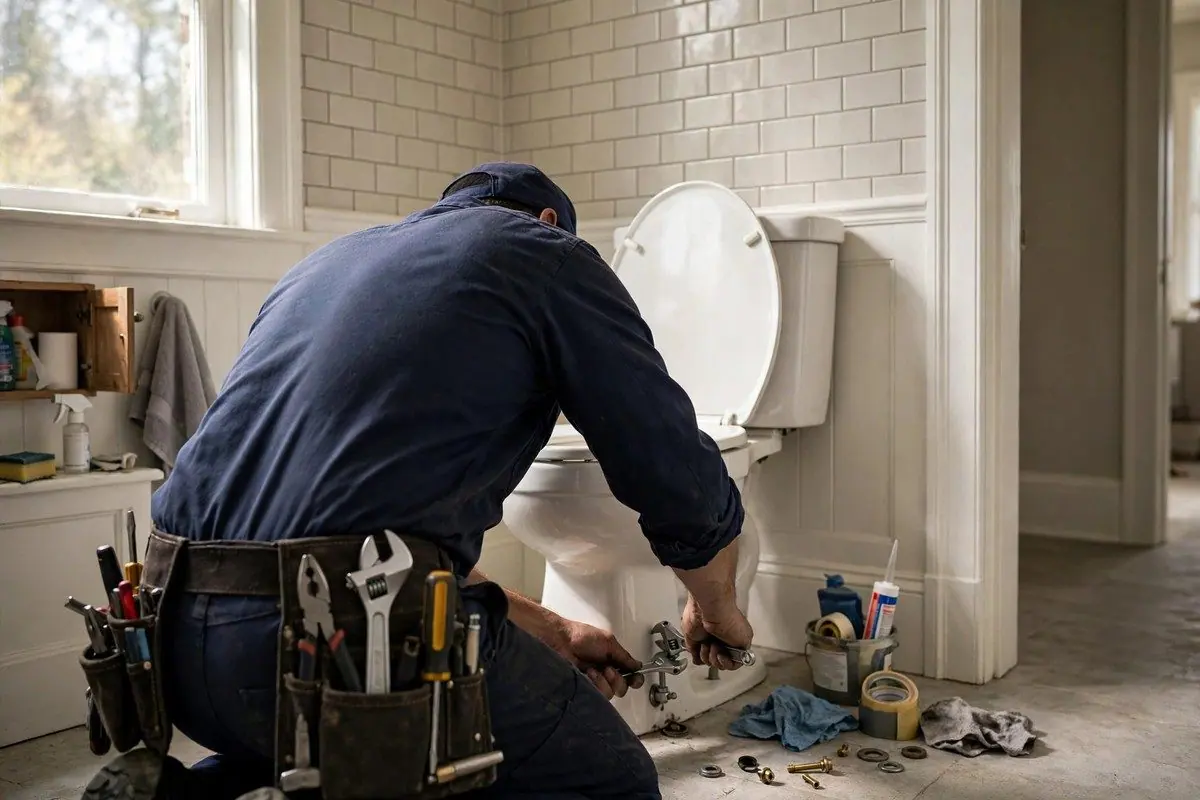
Five toilet problems and what each one usually means
The way a toilet misbehaves points to the cause. Use this list to describe the problem clearly when you call.
Water keeps running after the flush
A tank that refills over and over is usually a flapper that no longer seats, or a fill valve that will not shut off. Both are inside the tank and both are small parts. Left alone, a running toilet can waste a surprising amount of water and show up on the next bill.
Water around the base of the bowl
A damp ring or a puddle at the floor often means the seal under the toilet has failed, or the bolts have worked loose. It can also be a supply line or the shutoff valve dripping above the floor. A plumber checks the source before pulling the toilet, because the fix is different for each.
Weak flush or a bowl that fills slowly
Clogged rim jets, a partial blockage in the trap, or a tank that is not releasing enough water can all cause a lazy flush. If a plunger helps only for a moment, the cause is likely deeper than the bowl.
Gurgling, or other drains acting up as well
When the toilet gurgles while a shower drains, or water appears in a tub after a flush, the blockage is probably in the shared line and not in the toilet. That points toward drain cleaning or a main-line problem rather than a toilet repair.
A flush handle that does nothing
A loose or broken handle, or a chain that has come unhooked, leaves the bowl unable to flush at all. It looks dramatic but is often a quick tank repair.
If you cannot tell which of these you have, say what you see and hear. A good description saves a trip.
What to do if the toilet is overflowing or leaking right now
Water on a bathroom floor spreads fast, and a backed-up bowl can carry waste. These steps limit the damage until help arrives.
While you wait for the plumber
- Shut the supply valve.Turn the small oval handle behind or beside the bowl clockwise until it stops. That stops new water from entering the tank.
- Lift the tank lid if the bowl is rising.Push the flapper down into its seat by hand to stop water leaving the tank. Do not flush again.
- Stop using every drain in the house.If more than one fixture is slow or gurgling, the problem may be in the main line, and extra water makes it worse.
- Keep power away from the water.Do not use outlets, extension cords or a vacuum near standing water. Switch off the bathroom circuit if water is reaching a fixture or outlet.
- Protect people and floors.Wear gloves when you handle sewage-contaminated water, keep children and pets out, and put towels along the doorway.
Then call call (847) 281-8626. The line is answered around the clock, so an overflow at 2 a.m. gets the same attention as one at noon.
Checking a running toilet before you call
The EPA's WaterSense program describes a simple dye test that finds a leaking flapper without any tools. It takes about ten minutes.
Add dye to the tank
Put a few drops of food coloring in the tank water. Do not flush.
Wait ten minutes
Stay out of the bathroom for that time so nothing disturbs the water.
Look at the bowl
If color appears in the bowl, water is slipping past the flapper. That is a worn flapper, and replacing it is a routine repair.
Listen for hissing
If the bowl stays clear but the tank keeps refilling, the fill valve or float is the likely culprit instead.
EPA WaterSense also notes that flappers are commonly replaced about every five years. If yours is older and the dye shows a leak, you have your answer.
Toilet repair or full replacement
Not every failing toilet deserves a new one. This table shows how plumbers usually weigh the choice.
| Situation | Usual direction | Why |
|---|---|---|
| Running tank, otherwise sound | Repair | Flapper, fill valve or chain are inexpensive parts and quick to swap. |
| Leak at the base, floor solid | Repair | A new seal or tightened bolts often settles it. |
| Cracked bowl or tank | Replace | A crack in porcelain cannot be sealed in a lasting way. |
| Soft or stained floor at the base | Inspect first | Water may have been escaping for a while and the flange or floor may need work. |
| Frequent clogs with no drain problem | Consider replacing | Some older models flush poorly, and a newer bowl may clear better. |
A plumber can only confirm the right choice after seeing the toilet and the floor around it.
If you want a different height or an elongated bowl, say so on the call. Replacements are planned around the fixture you choose, and the old toilet is removed.
When the toilet is only the symptom
Callers often describe a toilet that bubbles, gurgles or backs up when another fixture runs. That pattern usually means the shared drain or the main line is restricted, and the toilet is just the lowest open point where the trouble appears.
In that case a toilet repair will not fix anything. The better step is a line clearing, and if roots or a collapsed section are involved, a camera inspection of the main. Our pages on sewer line cleaning and sewer inspection explain what that work looks like.
A smell without a visible leak
A sewer-type odor in the bathroom can come from a dry trap, a loose seal at the base, or a vent problem. A plumber can smoke or water test the area to find which.
Toilet will not stop overflowing?
Call the 24/7 line at (847) 281-8626 and a plumber can be sent the same day.
What decides the price of a toilet job
Toilet work ranges from a ten minute part swap to a floor repair, so one number would mislead. We give you the price before work starts, once the problem is understood.
Water in older homes, newer fixtures
Buffalo Grove's first houses went up after the village was incorporated in 1958, and growth was fast through the 1970s. Homes from those decades can still have original shutoff valves behind the toilet, and old stops that have not been turned in years sometimes will not close or leak when moved. If yours will not shut, mention it when you call so the plumber arrives with a replacement.
Many fixtures from that era also use more water per flush than current models. A replacement is a chance to choose a lower-use bowl, and the EPA WaterSense label is the thing to ask about.
Where the facts and rules on this page come from
The dye test, flapper guidance and the advice to check for silent leaks come from the EPA WaterSense home maintenance page. Sewage-safety steps follow CDC guidance on contaminated water. Plumbing work in Illinois falls under the Illinois Plumbing Code (Title 77, Part 890), and the Illinois Department of Public Health licenses plumbers.
You can confirm that any plumber holds a current license through IDPH's online plumbing license verification. Ask before work starts.
Questions we hear from homeowners
Yes. The line at (847) 281-8626 is answered 24 hours a day, and an overflowing toilet or a leak across the bathroom floor is treated as urgent. Shut the supply valve behind the bowl first, and the dispatcher will tell you what to do next.
A toilet that refills without being flushed is usually letting water slip past a worn flapper. The tank drops a little, the fill valve tops it up, and the cycle repeats. The dye test described above will confirm it.
It is better to stop. A leaking seal can soak the subfloor over time, and the damage often hides until the floor feels soft. Close the supply valve and have it checked.
Yes. Replacements include removing the old toilet and setting the new one on a fresh seal. Tell the dispatcher the height and bowl shape you want when you call.
Stop running water in the house and call. Slow or gurgling fixtures at once usually point to a restriction in the main drain, which needs a different fix than a toilet repair.
The price depends on whether it is a small part, a seal, a replacement or a blockage, and on the hour of the visit. You are told the price before any work begins.
Ask when you call. These units combine plumbing and electrical parts, so the dispatcher can tell you whether the visit covers the water connection, the seat, or both.