Signs your pipes may be due for replacement
No single sign means you need a repipe. A pattern does.
Repeated leaks
A second or third leak in the same run suggests the pipe is wearing out. Fixing each leak one by one adds up, while a planned replacement ends the cycle.
Brown or rusty water
Rust-colored water from several taps, especially after the water has sat, can come from corroding iron or galvanized pipe. A plumber should test before assuming the cause.
Falling pressure
Mineral and rust buildup narrows old pipes from the inside. The result is weak flow that gets worse over time, even when the main supply pressure is fine.
Pinholes and green stains
Tiny wet spots, blue or green crust on copper and stains on walls point to corrosion at fittings or along the pipe.
Aging galvanized steel
Galvanized pipe was widely used in older homes and tends to corrode from the inside out. It is a frequent reason homeowners ask about replacement.
Materials
Choosing between copper, PEX and other materials
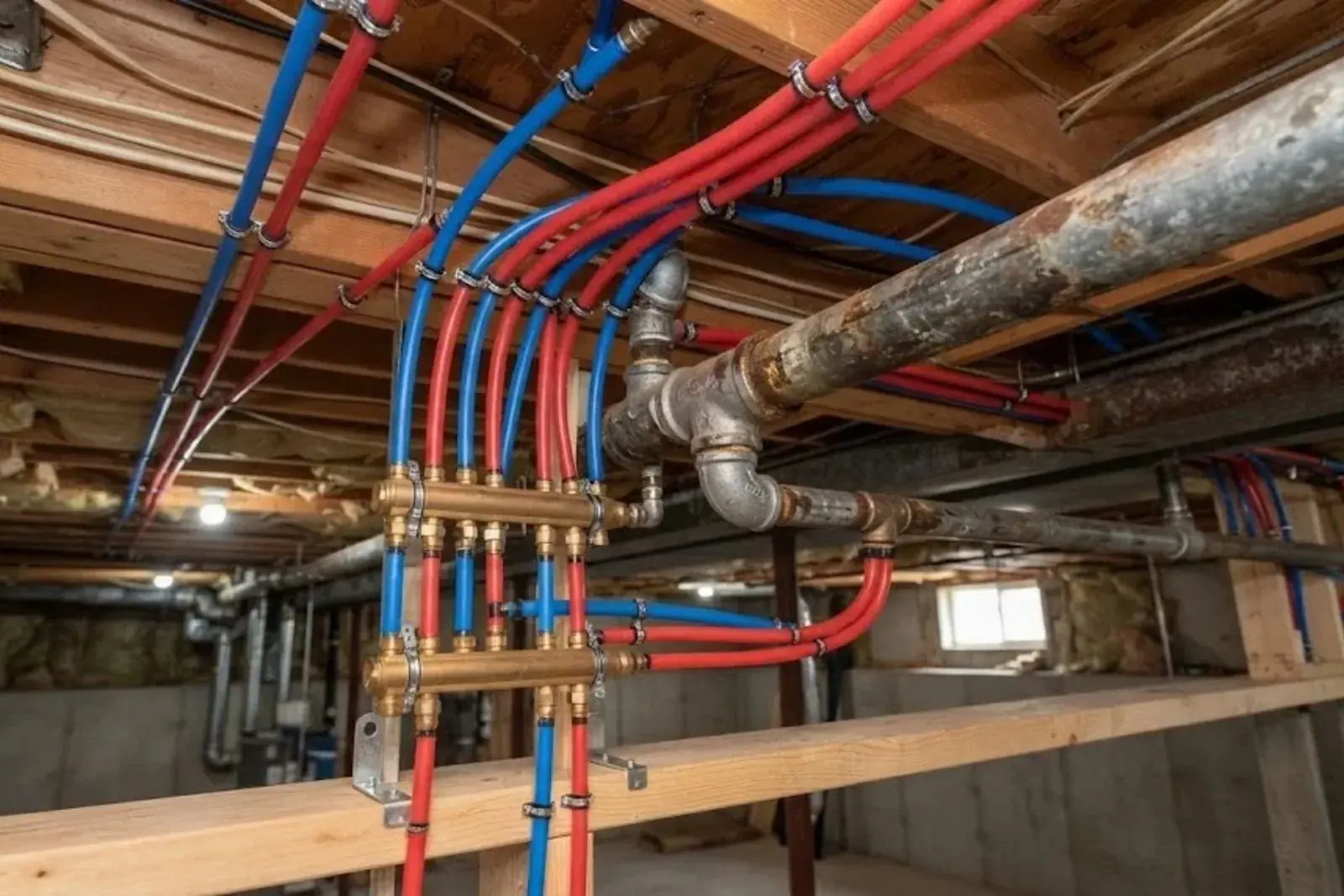
Copper is long established and handles heat well, but it costs more and needs soldered or fitted joints. PEX is a flexible plastic pipe that bends around corners and often needs fewer fittings, which can mean smaller wall openings.
Other pipes exist, and the right pick depends on the house, your water, code and what the plumber can reach. Ask the plumber to explain why a material is recommended, and what the fitting and connection methods are.
The Illinois Plumbing Code, 77 Ill. Adm. Code 890, sets the standard for new plumbing and alterations of existing systems, and the plumber chooses approved materials.
Whole-home repipe or replace in sections
Many houses do not need every pipe replaced at once.
A whole-home repipe fits when
- Leaks keep showing up in different places
- Most of the supply pipe is the same old material
- You are already opening walls for a remodel
- Water quality or pressure problems appear house-wide
A partial repipe fits when
- Only one run or one floor has failed
- The rest tests sound
- The budget calls for phasing the work
- Access to the problem area is easy
For a single burst, see burst pipe repair, and for tracing a hidden loss first, see leak detection.
What happens during a repipe
A well-run repipe is organized so you can keep living in the house as much as possible.
Inspection and plan
The plumber walks the house, checks the old pipe and shows where walls, ceilings or floors must be opened.
Permit
The Village of Buffalo Grove requires a permit for plumbing work other than maintenance, servicing or repairs, and registered contractors apply for it.
Water shutoff schedule
The plumber explains when the water will be off and arranges temporary access where possible.
Rough-in and connections
New lines are run, connected to fixtures and the main, and pressure tested before walls are closed.
Inspection and closing up
The work is inspected, then openings are patched. Paint and finishes are usually separate from the plumbing.
Thinking about a repipe?
Call (847) 281-8626 to talk through your pipes and get a clear price before any work begins.
Planning
Timing, disruption and living in the house
The length of a repipe depends on house size, access and how many walls are opened. Ask for a day-by-day plan and when water will be off each day.
Plan for dust, noise and moved furniture near openings. Protect floors and keep pets and children away from work areas. Ask whether the plumber will patch drywall or if you should hire a drywall finisher.
If your main shutoff valve does not close fully, mention that early. Replacing it during the repipe is common sense, and it means you can control water during future emergencies. Homeowners across the area, including in Arlington Heights, ask about the same upgrade.
What affects the cost of repiping
Repiping is priced by the house, not by the foot. You get a clear price before work starts.
Standards
The rules and sources behind this guide
Plumbers in Illinois are licensed by the Illinois Department of Public Health, and the Illinois Plumbing Code (77 Ill. Adm. Code 890) governs new plumbing and alterations. The permit requirement comes from Village of Buffalo Grove Community Development, 847-459-2530.
Pressure guidance of 45 to 60 psi comes from EPA WaterSense. To check a plumber, use the IDPH online license verification before you sign anything.
Questions we hear from homeowners
Look for a pattern: repeated leaks, brown water, falling pressure, pinholes or old galvanized pipe. One leak alone usually calls for repair, not replacement.
Often yes, though water will be off for part of each day. Ask the plumber for a schedule and a plan for bathrooms and the kitchen.
Both work. Copper is long established, while PEX is flexible and can need fewer fittings. The best choice depends on the house, water and code.
The Village of Buffalo Grove requires a permit for plumbing work other than maintenance, servicing or repairs. A registered contractor normally applies for it.
The cost depends on house size, material, access, fixtures, permits and patching. You are given a clear price before work starts.
Yes. Partial repiping is common when only one run has failed and the rest tests sound.
Call the 24/7 line at (847) 281-8626. The plumber can stop the leak and repair it, then the larger project can be scheduled.