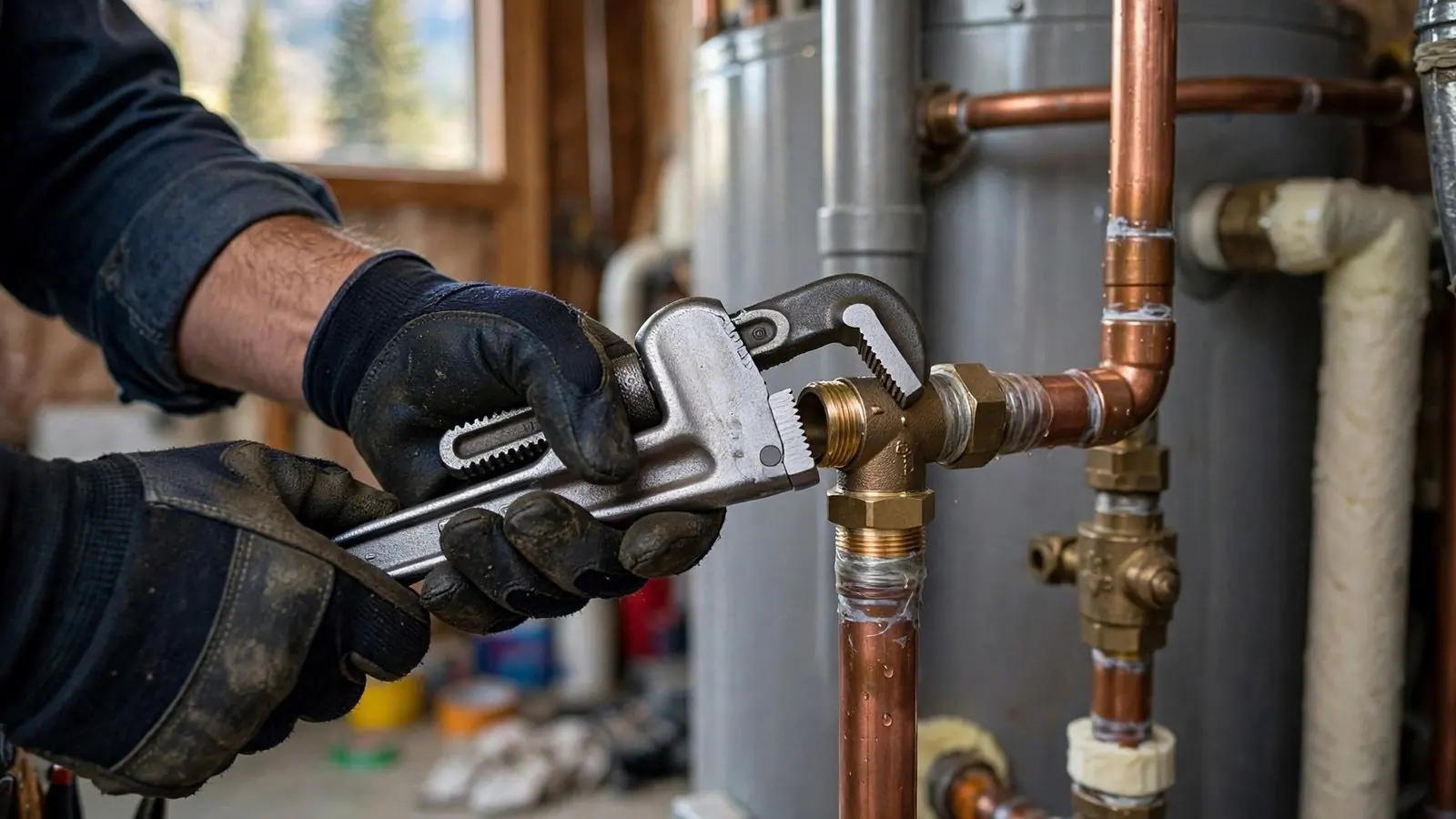
Active leak
When a leaking water heater is an emergency right now
Most water heater calls that come in at night start the same way: someone steps in a puddle in the basement, garage or utility closet. Water on the floor from a hot water tank is worth treating as urgent because a steady leak can soak drywall, flooring and stored boxes in a few hours. Even a slow drip can hide a failing tank that lets go all at once.
Plumbers sort these leaks into two groups. Leaks from the plumbing around the tank, such as a supply line, a valve or a fitting, can often be repaired the same visit. Leaks from the steel tank itself usually mean the tank is finished, and the honest answer is replacement, which we explain on the water heater replacement page.
The way to tell the groups apart is to dry everything, then watch. A plumber wipes the tank, the connections and the pan, then looks for the exact spot where a bead of water returns. That simple check keeps you from paying to repair a tank that cannot be saved, and from replacing a tank when a fitting was the only problem.
What to do if the water heater is leaking right now
These steps limit damage and keep the area safe. None of them needs tools beyond your hands.
While you wait for the plumber
- Close the cold supply.Turn the valve on the cold pipe above the tank clockwise until it stops. If that valve will not move, close the main water shutoff for the house.
- Cut the power or fuel safely.For an electric heater, switch off its breaker. For a gas heater, turn the gas control to its off or pilot position only if the dial is dry and easy to reach. Do not attempt to relight a pilot.
- Stay out of standing water.If water is near outlets, extension cords or the electrical panel, leave the area and switch off power at the panel only if you can reach it without stepping in water.
- Smell gas? Leave.Get everyone outside, avoid light switches and phones inside, then call Nicor Gas at 800-942-9727 or 911 from outside.
- Move what you can.Lift boxes, rugs and stored items out of the wet zone, and use towels or a wet vacuum on the floor.
Then call (847) 281-8626 at any hour. Tell the dispatcher whether the water is coming from the top, the bottom or the side of the tank, and whether it is hot or cold.
Tank leaking at 2 a.m.?
The line is answered around the clock, so call now and stop the water before it spreads.
Where the water is coming from
The location of the drip tells a plumber most of what they need to know before they open a toolbox. Here is how those spots usually break down.
Top of the tank
Water near the pipe connections often points to a loose fitting, a worn flex connector or a corroded nipple. These are usually repairable on site.
Relief valve and its pipe
A wet floor under the relief valve discharge pipe can mean the valve is opening because of pressure or heat. A plumber tests the valve and checks the system pressure before deciding what to change.
Drain valve at the bottom
A slow drip from the spigot-style drain valve is a common and small repair, though a stuck valve with sediment behind it may need extra care.
The tank body or base
Water seeping from the jacket or pooling under the tank, with dry fittings, generally means the inner tank has failed. Repair is not realistic and replacement is the route.
The drain pan
Water in the pan under the heater tells you something leaked, not what. The plumber dries the pan and traces the source back up the tank.
A line that runs from the heater to the wall can also leak well away from the tank, and a slab-level leak on that line is a leak detection job rather than a heater repair.
No hot water, or not enough: how the cause is found
Cold showers come from a short list of causes, and the type of heater decides which list applies. On an electric tank, a tripped breaker, a failed heating element or a bad thermostat is the usual suspect. On a gas tank, a pilot or ignition that has gone out, a faulty thermocouple or a gas control valve problem is more likely.
Plumbers also check the simple things first: whether the power or gas supply is on, whether the setpoint was bumped, and whether the cold supply valve is fully open. A heater that makes some hot water but runs out fast may have a failed element, a heavy layer of sediment or a dip tube problem. Energy.gov recommends a setpoint of 120 F for most households, which also lowers scald risk.
If the gas control is not lighting and you smell gas, stop and treat it as a gas emergency. Never try to relight a pilot yourself, because the safe procedure depends on the model and on whether the burner area is clean and properly vented. A plumber verifies the burner, venting and combustion air before the heater goes back into service.
Repair or replace: what the evidence points to
Not every failure justifies a new tank. This table shows how the common findings usually line up, and your plumber gives the actual call after inspecting your unit.
| What the plumber finds | Usual direction | Why |
|---|---|---|
| Leak at a fitting, valve or connector | Repair | The tank is intact, so only the part is replaced. |
| Failed heating element or thermostat | Repair | Common parts, typically fixed in one visit. |
| Pilot, thermocouple or gas control fault | Repair | The burner assembly can be serviced when the tank is sound. |
| Water seeping from the tank body | Replace | A failed inner tank cannot be patched. |
| Rust-colored water and repeated repairs | Often replace | Further parts may only delay the next failure. |
| Old unit, no date you can read on the label | Ask about both | The date code on the rating label helps judge age and condition. |
No age in years is promised here. Ask the plumber to read the date code and explain how the unit is holding up.
When replacement is the sensible answer, the water heater installation page covers sizing, venting and the permit steps.
Gas, venting and carbon monoxide around the heater
A gas or oil heater needs an open path for exhaust, and a leak in the water side can mask a problem on the combustion side. Water running down a flue, rust streaks at the draft hood or scorch marks near the burner are signs to stop using the heater and call. The Consumer Product Safety Commission notes that carbon monoxide can come from malfunctioning water heaters, furnaces and ranges, and it recommends keeping vents and flues unblocked.
Illinois law requires carbon monoxide alarms within 15 feet of every room used for sleeping (430 ILCS 135/10). If your alarm sounds, get everyone outside first and call 911, then call us about the appliance. A plumber checks flue draft, venting connections and the burner during a repair visit and tells you if anything looks wrong.
A heater in an enclosed closet or utility room deserves extra attention, because both fresh air supply and exhaust matter. Boxes stacked against the unit, a loose vent pipe or a blocked flue can cause trouble that has nothing to do with the tank itself.
Special cases homeowners ask about
Anode rod and tune-ups
Some callers ask only for an anode rod swap or a general check, not a fix. A plumber can inspect the unit, flush the tank if appropriate and explain what condition it is in. Energy.gov notes that periodic maintenance can extend a heater's life, so a short inspection can be worth a call before something fails.
Heat pump and hybrid units
Hybrid water heaters add a compressor and fan to a tank, so a repair may involve electronics as well as plumbing. Tell dispatch the brand and model when you call so the right plumber and parts come to the door.
Error codes on the display
Many newer heaters flash a code when something is wrong. Read the code and the model off the label before calling, since the manufacturer's manual explains what each code points to and the plumber can start with that clue.
Rerouting a vent
Moving a flue from a chimney to a side wall is a venting change, not a quick fix. It may need a permit and inspection, and the plumber confirms the new route suits the appliance.
Leaks near the heater that are not the heater
Sometimes the heater is the victim. These look-alikes can send people to the wrong repair.
Condensation on a cold tank
Beads of moisture on the outside of a cold supply pipe or a jacket in humid weather can look like a leak. Wipe it dry and see whether water returns.
Overflow from a relief line
A short burst of water from the relief pipe after the heater cycles may point to pressure. Persistent dripping should be checked by a plumber, along with the house pressure.
A pipe above or beside the tank
A leaking supply line or cracked pipe nearby can drip onto the tank. If a pipe has failed, see burst pipe repair.
What decides the cost of a water heater repair
Repair prices vary a lot from one job to the next, so we do not post numbers on this page. You get a clear price before work starts, after the plumber has found the fault and shown you what it involves.
Where the rules and facts on this page come from
Plumbing work in Illinois is licensed through the Illinois Department of Public Health under the Illinois Plumbing License Law, and the Illinois Plumbing Code (77 Ill. Adm. Code 890) sets the minimum standards. You can confirm any plumber's licence through IDPH's online verification tool before they start.
The 120 F setpoint and the point about maintenance come from Department of Energy guidance. The carbon monoxide and flue points come from the Consumer Product Safety Commission, and the alarm rule comes from the Illinois Carbon Monoxide Alarm Detector Act. The gas emergency steps follow Nicor Gas guidance, and permit details for tank replacements come from the Village of Buffalo Grove Community Development department.
Questions we hear from homeowners
Yes. The line at (847) 281-8626 is answered around the clock, and a leaking tank or a heater that will not start is exactly what after-hours dispatch is for.
Tell the dispatcher what you see and what you have shut off, and a plumber is sent to your door.
It depends on where the water comes from. Leaks at fittings, valves and connectors are usually repairable, while water seeping from the tank itself generally means the tank has failed.
A plumber dries the unit, finds the source and shows you the repair or replacement choice with a clear price first.
On an electric heater, the usual causes are a tripped breaker, a failed element or a thermostat fault. On a gas heater, look to the pilot, ignition or gas control.
Check that the breaker or gas supply is on and the setpoint has not changed, and call if the problem persists. Do not try to relight a pilot yourself.
Yes. Close the cold supply valve above the tank and switch off the power or fuel, but only if you can do so safely and without stepping in water near electrical equipment.
If you smell gas, leave the home and call Nicor Gas at 800-942-9727 or 911 from outside.
The location of the failure matters most. A bad part on a sound tank is worth repairing, and a failed tank is not.
Ask the plumber to read the date code on the rating label and explain the unit's condition, since no single age fits every heater.
The price depends on the part that failed, the fuel type, access to the unit, venting needs and the time of day. We do not quote a number without seeing the problem.
You get a clear price before work starts, so there is no surprise on the invoice.
Yes, tell dispatch the brand and model when you call. Tankless units and heat pump hybrids have their own parts and error codes, and the right plumber can be sent with that information.
For tankless-specific work like descaling, see the tankless water heater page.