Where it starts
The cleanout is where a sewer cleaning begins
Most houses have a capped pipe called a cleanout on the sewer line, often outdoors near the foundation or in the basement near the main stack. It gives a plumber a straight shot into the line without removing a toilet. Knowing where yours is saves time on the call.
If you cannot find one, say so when you phone. Some houses have no cleanout, and then the plumber works through a toilet flange or a roof vent. That takes longer, and the dispatcher explains it before anyone starts.
Do not open a cleanout cap on a full line. The pipe may be holding water and waste under pressure, and the cap can release it into the room or the yard.
What to do if the main line is plugged right now
A plugged main is a house-wide problem. These steps reduce the mess.
Waiting for the plumber
- Stop using water.No flushing, no laundry, no dishwasher. Each use sends more into a line that cannot take it.
- Keep sewage away from the living space.If a floor drain is rising, move belongings off the floor and keep children and pets out.
- Use gloves and boots.Contaminated water can carry germs. Wash your hands with soap and clean contaminated clothing in hot water with detergent.
- Keep power away from water.Stay out of a flooded basement if the panel, a freezer or a furnace sits in the water.
- Call Public Works about the street.The village asks homeowners to report a backup at 847-459-2545 in business hours, or at the police non-emergency line, 847-459-2560, after hours.
What is in the main line and the tool that clears it
Different blockages call for different tools. This is how plumbers usually match them.
| What is in the pipe | Tool | What to watch for afterward |
|---|---|---|
| Paper, wipes and soft buildup | Medium or heavy cable | A quick return means something is holding it in place |
| Tree roots | Heavy cable with a cutting head | Roots grow back if the entry point stays open |
| Grease and scale | Cable, then hydro jetting | Walls should be clean, not just opened |
| A stuck object or toy | Retrieval tool or camera-guided removal | Check that the pipe was not damaged |
| A cable that will not pass | Camera first | A break, offset or collapse may be the cause |
The plumber confirms the actual tool on site.
Main sewer cleaning
Clearing the main: what the visit looks like
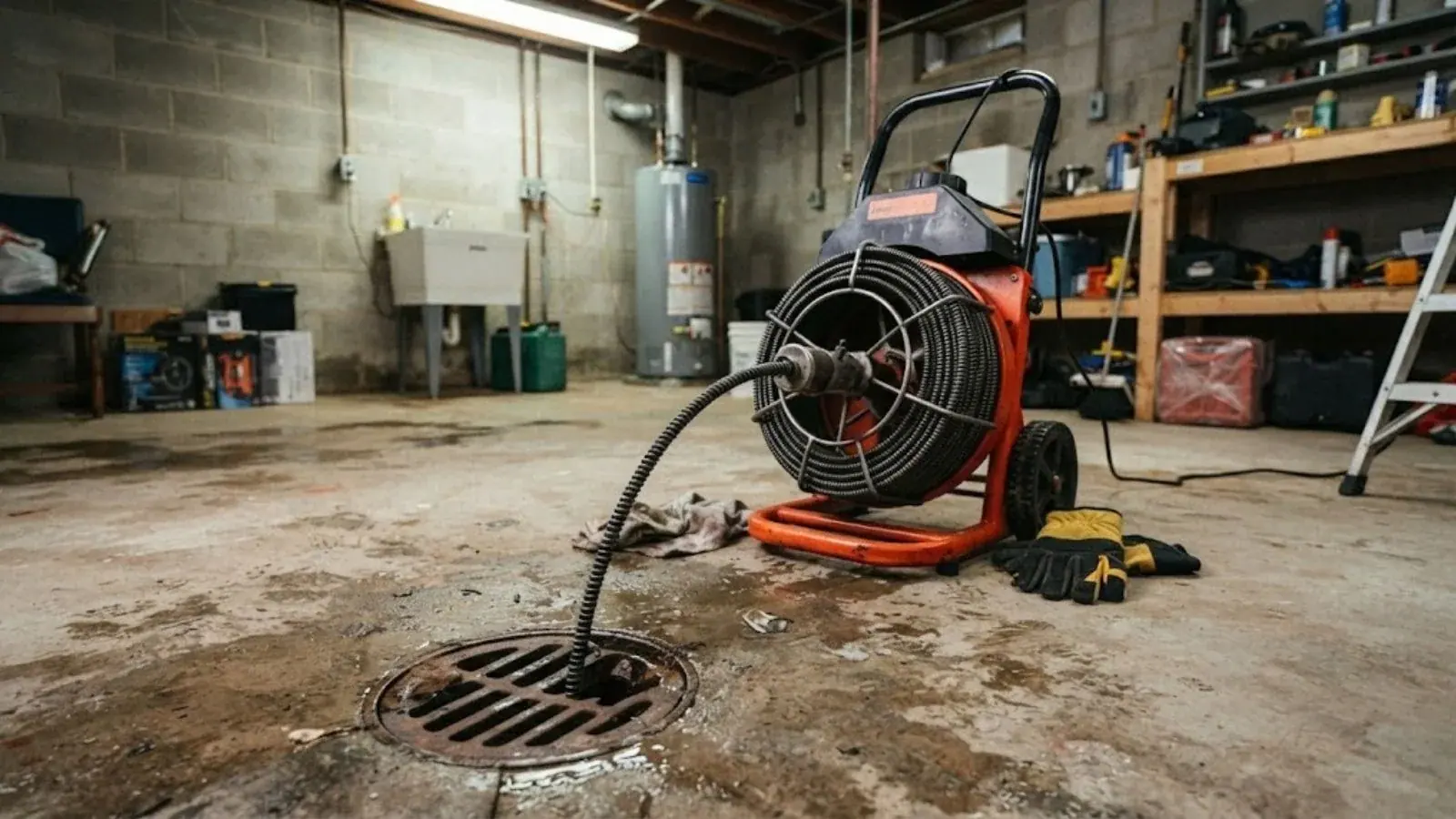
The plumber sets up at the cleanout, protects the floor or lawn, and feeds a cable into the line. The cable advances until it meets the blockage, and the plumber works it back and forth until the machine moves freely. Roots may come out in rope-like clumps, and wipes in a knot.
When the cable runs freely, the plumber runs water to see how the line drains. A slow drain after cleaning can mean the pipe still has buildup on its walls or a low spot where water sits. In that case a camera look or a jet pass is the next step.
Some owners also ask for a camera pass right after the cleaning. It shows whether the line is clear, whether roots entered at a joint, and whether a repair is worth planning. That footage also helps if you ever sell the house.
Main line plugged or draining slowly?
Call (847) 281-8626 any time and a plumber will be sent to open the line.
Why it clogs
Why a sewer line clogs and how to slow it down
The common causes are roots, grease, wipes labeled flushable, and a sag that holds water. Paper alone usually passes, but wipes, feminine products and paper towels do not break apart. They catch on roots or rough joints, and the rest of the waste piles up behind them.
Homes with mature trees near the sewer line tend to see more root trouble. That is general experience, not a rule about any one street. If your property has large trees, ask the plumber to check for roots when the camera goes in.
A few habits help. Keep wipes and grease out of the drain, use strainers, and have the line cleaned when it starts to slow rather than waiting for a backup. If cleanings are close together, the line probably needs repair, not another cleaning.
Private line
Who clears the line between the house and the street
In Buffalo Grove the private sewer line from the house to the main is the homeowner's. Public Works handles the village mains and does not root-cut or televise private lines. That means a plumber does the cleaning on your side, and the village is the first call only to check the street main.
If a cleaning shows the blockage is out in the street main, the plumber will tell you what was found and Public Works can follow up. If the blockage is on your line, the plumber clears it and reports what the line looks like.
What decides the price of a sewer line cleaning
You hear the price before the cable goes in. These pieces drive it.
Related work
When cleaning leads to something else
Cleaning solves a blockage but not every reason for it. If the line clogs again, the next step might be a look with a camera, a sewer inspection, or a repair of the damaged section. Another sign of trouble is a floor drain that backs up after heavy rain, and basements prone to that may benefit from drainage work around the foundation.
Callers sometimes want septic service instead of sewer cleaning. If you are not sure whether your property is on the village sewer, ask Public Works or check your records before calling.
Sources
Where this page gets its facts
The ownership, backup and contact information come from the Village of Buffalo Grove Sewer and Drainage page. Notes on contaminated water follow CDC guidance for floodwater and sewage, and the backup causes follow the Metropolitan Water Reclamation District's sewer guide.
Plumbers in Illinois are licensed by the Illinois Department of Public Health, and you can check a license through IDPH's online verification before work begins.
The cleaning steps here follow the village's rule that the lateral is private, and the safety guidance follows CDC standards for sewage contact.
Questions we hear from homeowners
Yes. The line at (847) 281-8626 is answered around the clock, and a plumber can be sent for a plugged main at night or on a weekend. The dispatcher gives the price, including any after-hours rate, before the cable goes in.
Several fixtures slow down or back up together, and the lowest drain in the house is often the first to overflow. Gurgling toilets and a sewer smell are other signs. A single slow sink is more likely a local clog.
It is a capped pipe, often near the foundation outdoors or near the main stack in the basement. If you cannot find one, tell the dispatcher and the plumber will find another way in.
Roots, grease, wipes and a sag in the pipe are the usual reasons. If cleanings keep coming close together, ask for a camera look to find the cause.
No. Public Works handles the village mains and does not root-cut or televise private lines. Call it about a backup so it can check the street, and call a plumber for your line.
Cabling is the usual first step to open the line. Jetting follows when grease, scale or root hair needs to be washed from the walls. The plumber chooses after seeing what is inside.
A short, soft clog near a cleanout is sometimes within reach. A full main with sewage standing in it is a health risk and best left to a plumber with the right equipment.