Start here
Before you buy the fixture
Bring the model name or the spec sheet to the call. Rough-in dimensions, drain size and supply connections vary, and a fixture that fits the catalog photo may not fit your wall.
Tell the dispatcher what room it is, what floor, and whether the walls are open. Those three answers shape the scope more than the fixture itself.
Common installation jobs
Most calls fit one of these patterns.
Tub, shower and valve work
A new tub or shower needs a drain, a trap, a valve and a vent path. Replacing only the trim is easier than moving the valve.
Basement bathroom or bar sink
Below-grade fixtures often drain upward or to a sump or ejector. That decision comes before framing.
Kitchen and laundry hookups
Dishwashers, ice makers, island sinks and washer boxes each need supply, drain and an air gap or standpipe.
New construction rough-in
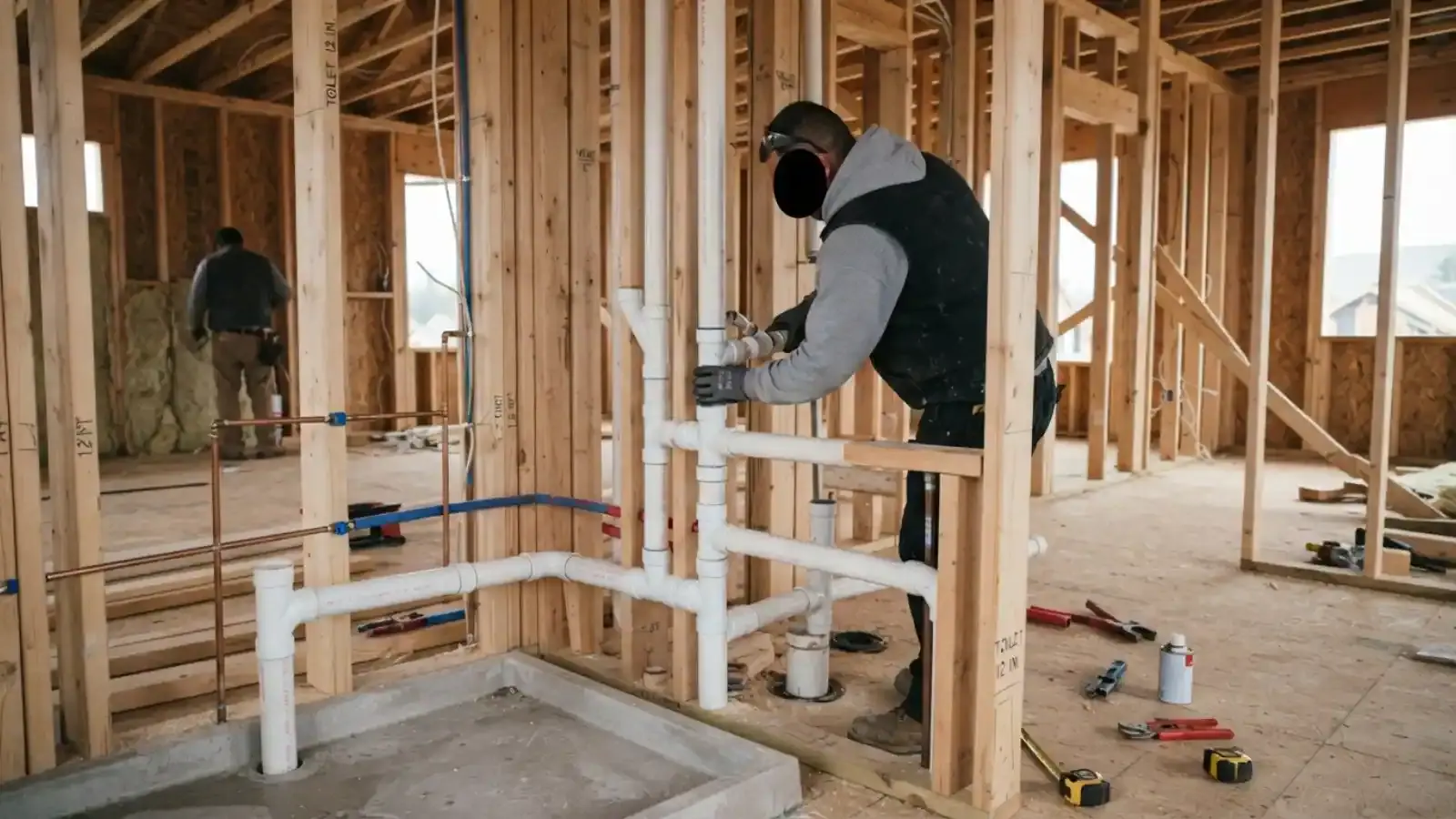
Plumbing is laid out and inspected before walls close. The sequence matters more than any single fitting.
Whole house changes are different. See repiping when old supply pipe is the real issue.
What the installer needs to know
Answering these on the phone speeds up the scope.
| Question | Why it matters |
|---|---|
| Which floor and room | Sets the drain route, vent path and access |
| Walls open or closed | Open walls cut labor, closed walls need access cuts |
| New location or swap | Moving a fixture means moving drain and vent |
| Fixture already bought | Rough-in sizes must match the unit |
| Who handles tile and drywall | The plumber's work ends before finish trades start |
| Gas appliance involved | Gas piping and shutoffs follow separate rules |
A quick photo of the space is useful when the dispatcher asks.
What the Illinois Plumbing Code means for your job
The Illinois Plumbing Code, 77 Ill. Adm. Code 890, governs the design and installation of new plumbing and alterations to existing systems. It generally is not applied to an existing building unless the plumbing is altered, the use changes or there is a health or safety hazard.
One rule that shows up in practice: there may be no direct connection between potable water lines and sewage lines. That is why air gaps and backflow protection appear on drawings.
How the work moves from call to inspection
The steps change a little by job, but this is the usual order.
Scope and price
The plumber confirms the fixture, the route and the access, then explains the price before work starts.
Permit when required
Buffalo Grove requires a permit for plumbing work other than maintenance, servicing or repairs. The village Community Development office, 847-459-2530, issues them, and contractors must be registered with the village.
Rough-in
Drains, vents and supply lines are set. Pressure or fill tests are done while the lines are still visible.
Inspection
Where an inspection is required, the work stays open until it passes. Ask the plumber what is scheduled and who is present.
Set fixtures and test
Fixtures are connected, shutoffs are labeled, and every joint is checked under pressure.
What changes the price of an installation
You get the price before work starts. These are the usual drivers.
Ready to plan the install?
Call (847) 281-8626, describe the room and the fixture, and get a clear price first.
Water pressure and supply sizing
EPA WaterSense gives a target of 45 to 60 psi for incoming pressure and notes that codes require a pressure-regulating valve above 80 psi. High pressure can damage piping, fixtures and appliances and raise leak risk.
A new installation is a good time to put a gauge on a hose bibb and read the number. If it is far outside that range, ask the plumber about the regulator before adding fixtures.
New construction and remodel timing
New construction plumbing has to be planned with the builder and the framer, since rough-in happens before drywall. Share the fixture list and the schedule so the plumber can arrange the visits.
For remodels, tell the plumber about hidden hazards you already know of, such as an old cast iron stack or a patched slab. Surprises there change the price, so it is better to flag them early.
Related services and where we work
Installation often connects to other jobs: a new water heater installation, a water softener, or a sewer inspection before adding a basement bath.
We serve Arlington Heights, Wheeling, Lincolnshire and Deerfield as well. See all services or the service area.
Sources behind this page
Code statements come from the Illinois Plumbing Code (77 Ill. Adm. Code 890), administered by the Illinois Department of Public Health. Pressure figures come from EPA WaterSense guidance.
Permit steps come from the Village of Buffalo Grove Community Development office. Illinois plumbers are licensed by IDPH, and the online license verification lets you confirm any plumber before work starts.
New work follows the Illinois Plumbing Code, and the village decides which permits and inspections a given installation needs.
Questions we hear from homeowners
New fixtures, new supply and drain lines, appliance hookups and rough-in for remodels or new construction.
Buffalo Grove requires a permit for plumbing work other than maintenance, servicing or repairs. The plumber confirms what your job needs.
Share the model number first. Rough-in size and connections must match, and the plumber can confirm before you buy.
Yes, but moving a fixture means moving its drain and vent, which raises the scope and price.
Yes. Rough-in is planned with the builder and finished before walls close.
Close the nearest shutoff and call. The 24/7 line is answered around the clock.
By access, fixture type, pipe condition and permit needs. You get a clear price before work starts.