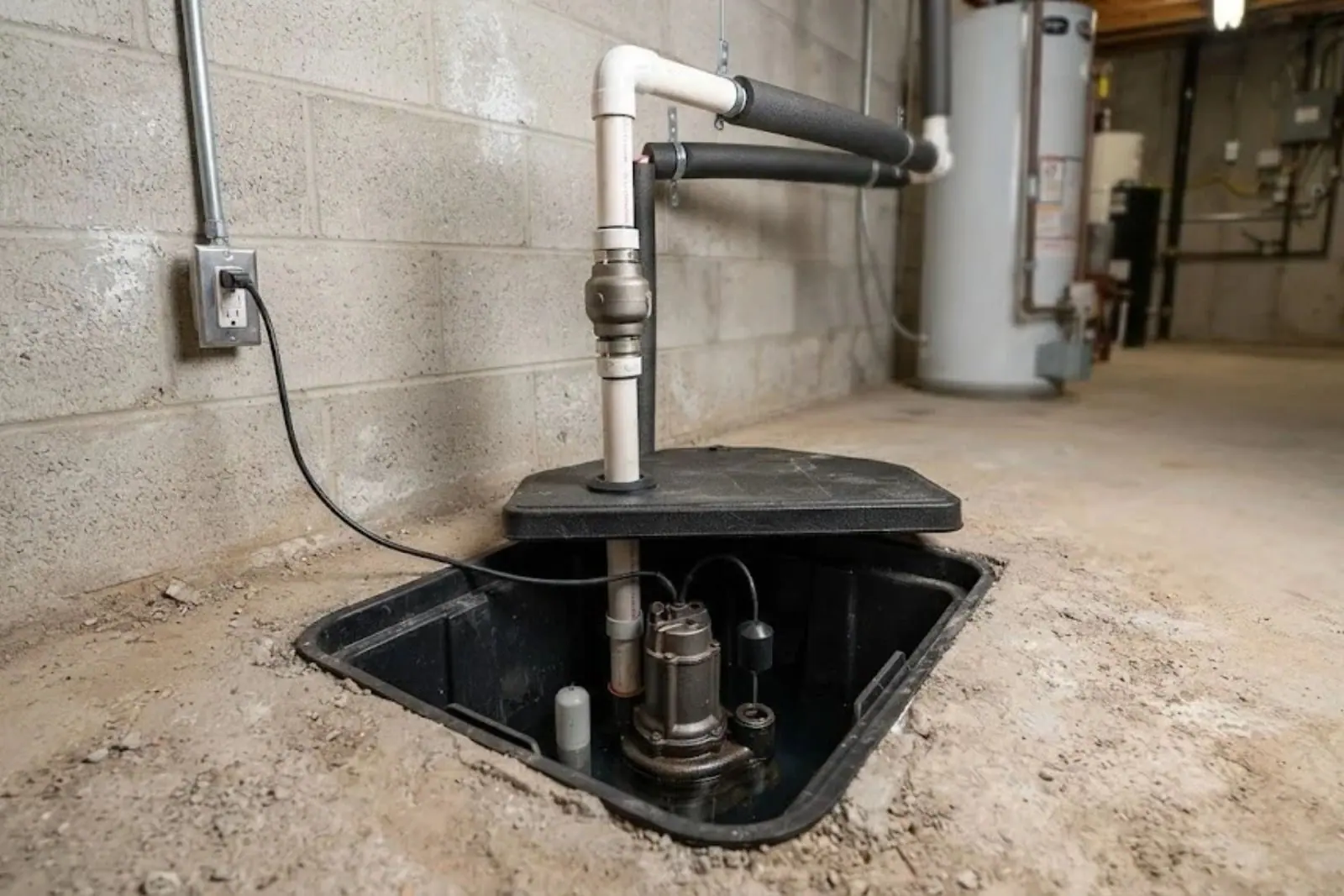
Normal running versus a problem
Pumps are built to run when water arrives, so the first question is whether the weather explains it. This table separates the two.
| What the pump is doing | Usually means | Next step |
|---|---|---|
| Runs for long stretches during heavy rain | Groundwater is high and the pump is keeping up | Watch the pit level, no repair needed unless water keeps rising |
| Runs for a day or two after a thaw or storm | Soil is still draining toward the pit | Normal, check again once the ground dries |
| Runs constantly in dry weather | Stuck float, leaking supply line or a high water table | Check the float, look for water entering the pit |
| Turns on and off every few seconds | Failed check valve, undersized pit or a float set too close | Call, FEMA lists cycling in rain as a sign to replace |
| Runs but the pit level never drops | Blocked discharge, airlock or worn impeller | Call, the pump may be running dry |
| Runs and sounds louder than before | Worn bearings or debris in the impeller | Plan a replacement visit |
A sump pump running with no water at all can overheat the motor.
Four common reasons for nonstop running
Most constant-running pumps fall into one of these groups.
A stuck or tangled float
If the float is hung on the pit wall, the cord or the discharge pipe, the switch never gets the signal to turn off. The pump keeps running even though the pit is nearly empty. Unplug the pump before moving anything, then free the float and plug back in.
A check valve that has failed
The check valve sits on the discharge pipe and stops water from flowing back down after each cycle. When it fails, the same water returns to the pit, the pump starts again, and you hear short bursts over and over.
High groundwater
When the water table is high after heavy rain or snowmelt, water enters the pit continuously. The pump is not broken, but it may be undersized or close to the end of its life. A plumber can tell you whether a second pump or a larger one makes sense.
A worn pump or blocked intake
A pump with a clogged inlet screen or worn parts moves less water per minute and therefore runs longer. FEMA recommends cleaning the screen and replacing pumps that are over 10 years old.
What you can safely check at home
Keep these checks to what you can do from dry footing with the pump unplugged when you touch anything.
Listen and watch one full cycle
Stand near the pit and watch the water level when the pump runs. It should drop, the pump should stop, and the pit should slowly refill. If the level stays the same while the motor runs, the pump may be airlocked or its impeller may be worn.
Look at the float
With the pump unplugged, check that the float moves freely up and down. It should not touch the pit wall or the discharge pipe. Move any cord that is pulling on it.
Check the outside discharge
Go outside while the pump runs. Water should come out steadily at the end of the pipe. If you see a trickle, water backing up or ice, the pipe may be blocked, and the pump is working against it.
Do the bucket test
Pour a bucket of water into the pit. The pump should start, empty the pit and shut off. If it does not shut off, the float or switch is the likely problem.
If any of these steps point to a part you cannot reach safely, stop there. Water, a live motor and a wet floor are a poor mix.
Pump running all day and you cannot find why?
Call (847) 281-8626 and a plumber can check the float, valve and discharge.
What a plumber checks that you cannot
A plumber looks at the full system, not just the motor. That means testing the float switch, inspecting the check valve, measuring how fast the pit refills and checking whether the discharge line is sloped and clear. If you want the pump itself repaired or replaced, our sump pump installation and repair service covers that.
Sometimes the answer is that water is entering the pit too fast for a single pump. In that case the plumber may suggest a larger pump, a battery backup unit or a look at where roof and yard water is going. For deeper moisture problems, basement waterproofing looks at the cause rather than the symptom.
What shapes the price of a repair or replacement
We do not quote prices in a blog post because every pit is different. The price is given before work starts, and these are the factors that move it.
Where the water goes when the pump runs
Because a running pump moves a lot of water, where that water lands matters. The Village of Buffalo Grove asks that sump discharge be disconnected from the sanitary sewer and directed to the storm sewer or the lawn, no more than 10 feet from the house.
If your discharge is aimed at a spot close to the foundation, a pump that cycles constantly can pull the same water back to the pit. A plumber can look at the slope and the end of the pipe and tell you whether it is part of the problem.
Sources behind this explanation
FEMA's sump pump guidance covers the bucket test, cleaning the inlet screen, inspecting the check valve and replacing a pump that is over 10 years old, never heard running or cycling in rain. The Village of Buffalo Grove sump pump handout and Sewer and Drainage page cover the discharge rules.
You can confirm any plumber's license through the Illinois Department of Public Health online verification before you hire.
FEMA guidelines supply the test and replacement signs used here, and the village handout supplies the discharge specifications.
Local note
What Buffalo Grove homeowners should know
Buffalo Creek is the village's main flood source, and the Cook County hazard plan lists federal flood declarations in 1972, 1973, 1986, 1987, 1993 and 2013. In wet years the ground around the creek and its tributaries stays saturated, so a pump that runs for long stretches after a storm may be responding to real conditions, not a fault.
The village straddles Lake and Cook counties, with about three quarters in Lake County. If you are not sure how your property drains, the Engineering office at 847-459-2523 handles storm connection permits and can point you to the right information.
The same dispatch line also covers Lincolnshire and Deerfield, so a pump question from either town reaches the same 24/7 team.
Questions we hear from homeowners
It is normal during heavy rain or a thaw, when groundwater is high. It is not normal in dry weather, and it is a warning if the pump turns on and off every few seconds.
A failed check valve is a common cause, because water drains back into the pit after each cycle. A small pit or a float set too close to the pump can also cause short cycling.
Yes. A pump that runs nonstop, or runs with no water, can overheat and wear out early. FEMA recommends replacing pumps that are over 10 years old or that cycle in rain.
Only if the pit is dry and you have a good reason. If the basement could flood, leave it plugged in and call a plumber instead.
The village asks that discharge be disconnected from the sanitary sewer and directed to the storm sewer or the lawn, no more than 10 feet from the house. A storm connection needs a permit from the Engineering office.
Yes. The line at (847) 281-8626 is answered 24 hours a day, including weekends.