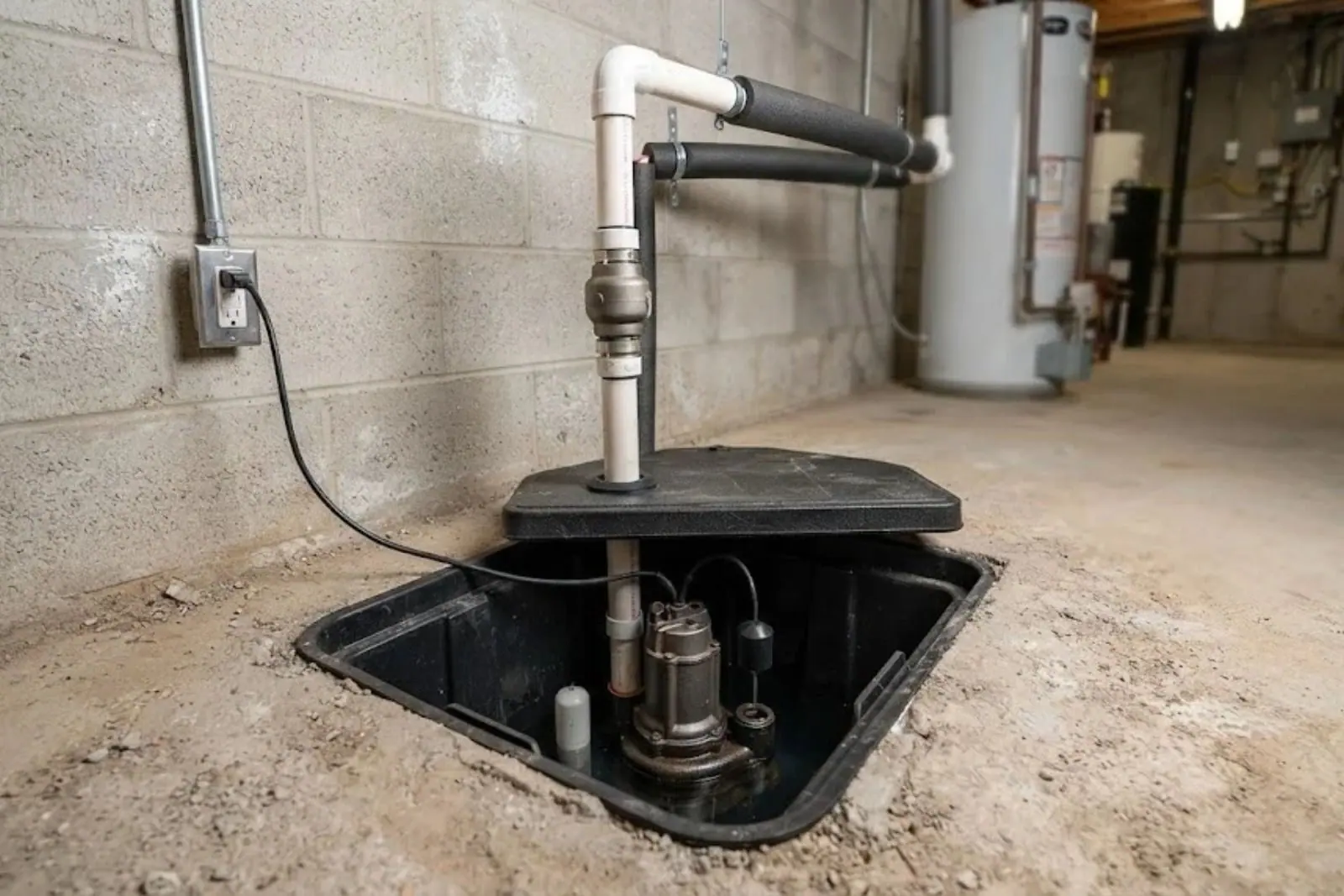
How a frozen discharge line causes a flood
A sump pump pushes water up and out through a discharge pipe. When that pipe freezes at the outlet or in a low spot, the pump keeps pushing against ice. The motor runs, the pit stays full, and water can rise toward the floor.
Water that leaves the pipe in cold weather can also freeze on the ground around the outlet and build a block of ice right in front of it. This is why the problem often shows up during long cold stretches rather than on a single frosty night.
Signs the discharge line is frozen
You can usually spot this from the basement and the yard. Check both.
- The pump hums or runs but the pit level does not drop.A pump that runs without lowering the water is often pushing against a blockage.
- No water leaves the pipe outside.Go out while the pump runs. A dry or trickling outlet in winter is a warning.
- Ice around the outlet.A cone or sheet of ice near the pipe end can block the opening.
- Water drips from fittings inside.Pressure from a blocked line can force water out at joints near the pit.
- The pump cycles quickly.Pumped water falls back into the pit through a partly blocked pipe and the pump restarts.
How to thaw it without making it worse
The Red Cross guidance for frozen water pipes applies to a discharge pipe too, with one extra point: keep the pump unplugged while you work on the line.
Unplug the pump
A pump that runs against ice can overheat. Unplug it only if the floor around the outlet is dry and the pit is not about to overflow.
Clear ice at the outlet
Break away loose ice around the pipe end with a plastic tool or your gloved hand. Do not hammer on the pipe itself, because frozen plastic can crack.
Apply gentle heat
The Red Cross suggests a hair dryer, heating pad or hot towels for frozen pipes. Keep heat sources away from anything flammable and from standing water. Never use a blowtorch, propane heater or other open flame.
Restart and watch the outlet
Plug the pump back in and watch water leave the pipe. If it flows steadily, the line is clear. If not, call a plumber instead of forcing it.
Pit rising and the pipe will not clear?
Call the 24/7 line at (847) 281-8626 and describe what you see at the outlet.
Pipe setups that freeze and setups that stay clear
How the pipe is laid out matters more than the weather. These are the features a plumber looks at.
More likely to freeze
- Low spots where water sits and cools
- A flat or backward slope
- An outlet buried in a snowbank or ice pile
- A discharge that ends right at the foundation
- A closed cap or fine screen at the end
Less likely to freeze
- A steady slope away from the house
- An outlet that stays open and visible
- A pipe run shortened and drained after each cycle
- A discharge that releases water onto sloped ground
- A check valve and a clean, open end
These are common practices, not a guarantee. A plumber can look at your actual run and tell you which changes make sense.
What the village asks and why it matters in winter
The Village of Buffalo Grove asks that sump discharge be disconnected from the sanitary sewer and directed to the storm sewer or the lawn, no more than 10 feet from the house. That puts the outlet close to the home, where meltwater can pool and refreeze at the end of the pipe.
If your outlet freezes year after year, ask a plumber whether a storm sewer connection is an option. The village requires a permit from Engineering at 847-459-2523 for that work, and a plumber can tell you what is involved before anyone starts.
Cold stretches this area has already seen
The Cook County hazard mitigation plan lists extreme cold events in 2019, 2021 and 2022, and Buffalo Grove's hazard record includes the same three years. Long deep-freeze periods are exactly when discharge lines ice up, because the ground and the pipe stay cold for days.
If you did not have trouble in those winters, that does not mean your setup is safe. It may only mean the pump ran less often. Walk the pipe route this fall and check slope, caps and outlet before the next cold snap.
What a plumber can fix
A plumber can clear the ice, regrade or reroute the run, remove a cap or fine screen, and test the pump with a bucket of water to make sure the system works end to end. Our sump pump installation and repair visits include that kind of check, and the price is explained before work starts.
If water already got into the basement, ask about basement waterproofing and about drain cleaning if the floor drain backed up. For local help in the area, see the pages for Wheeling and Arlington Heights.
Winter prep list for the discharge pipe
Do these in fall, before the ground freezes.
- Check the slope.Water should run away from the house and not sit in the pipe.
- Open the outlet.Remove debris and make sure nothing blocks the end.
- Test the pump.Pour a bucket of water into the pit and watch the outlet outside.
- Keep a path clear.Shovel snow away from the outlet after storms.
- Know your plan.Keep the dispatch number where you can find it in a dark basement.
Where this guidance comes from
The thawing steps follow American Red Cross frozen pipe guidance, including the warning against any open flame. Pump testing and discharge points come from FEMA sump pump guidance, and the discharge request comes from the Village of Buffalo Grove sump pump handout.
The extreme cold years come from the Cook County hazard mitigation plan. You can verify any plumber's license with the Illinois Department of Public Health.
The 10-foot discharge distance is the village's guideline and the testing steps follow FEMA guidance, so the two should be read together.
Local note
What Buffalo Grove homeowners should know
The Cook County hazard plan lists extreme cold events in 2019, 2021 and 2022. In practice, the first weekend of a hard freeze is the best time to walk the discharge route and look at the outlet.
The village wants sump discharge within 10 feet of the house, onto the lawn or into a permitted storm connection. That placement is fine in summer, but it leaves less distance for ice to build before it blocks the pipe, so the outlet needs more attention in winter.
Questions we hear from homeowners
The pump runs but the pit does not drop, and no water leaves the pipe outside. You may also see ice at the outlet.
No. The Red Cross says not to use a blowtorch, kerosene or propane heater or any open flame. Use a hair dryer, heating pad or warm towels.
It can overheat the motor and shorten its life if it runs against a blockage for a long time. Clear the line quickly or call a plumber.
Keep a steady slope away from the house, keep the outlet open and clear of snow, and avoid low spots. A plumber can adjust the run if it holds water.
The village asks that discharge be disconnected from the sanitary sewer and directed to the storm sewer or the lawn, no more than 10 feet from the house. A storm connection needs a permit from Engineering.
Yes. The line at (847) 281-8626 is answered around the clock, including during cold snaps.