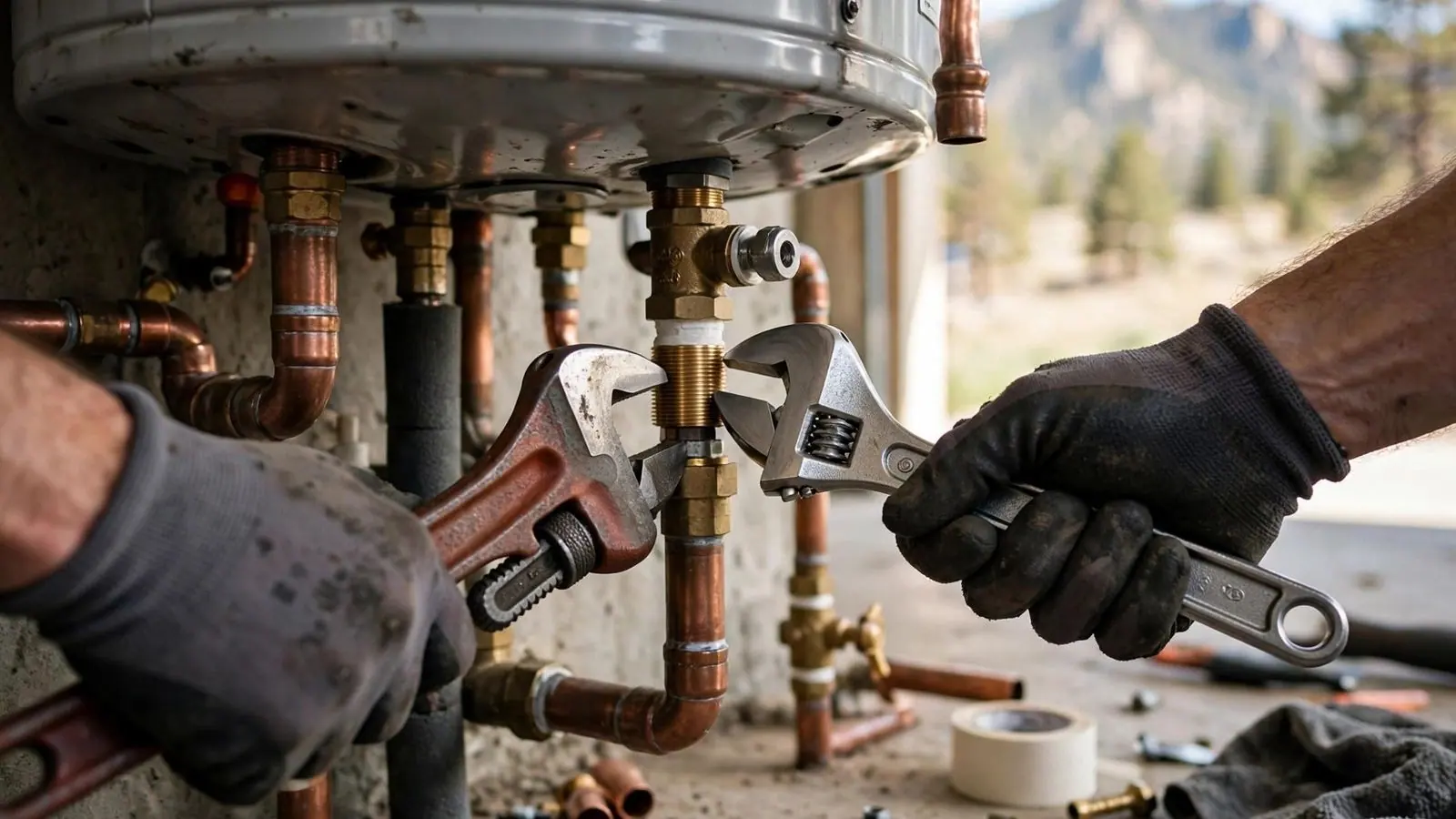
The short answer, and why it varies
A plumber cannot give an honest hour count over the phone without knowing what is being removed and what is replacing it. The old and new unit, the fuel, the venting and the room all change the length of the visit. What we can say is that a straightforward swap is the shortest version of the job, and every change from the original setup adds work.
Ask for the expected window when you call, and ask what would change it. A good answer names the specific things the plumber will look at on arrival, such as the vent, the gas connection, the shutoff valves and the path to carry the old tank out. That is more useful than a flat promise.
What to do if the heater fails tonight
A failed tank can wait a few hours if the water is controlled, and the steps below keep a bad night from getting worse.
- Stop the water.Close the cold supply valve above the tank. If it will not turn, shut the main water valve.
- Power down.Switch an electric heater off at the breaker. For gas, do not relight anything yourself.
- Gas smell means leave.Walk outside and call Nicor Gas at 800-942-9727 or 911 from outside.
- Call the 24/7 line.Tell the dispatcher the tank size and fuel type if you can read the label.
What happens during a replacement visit
Every water heater replacement follows the same sequence, whether the tank is in a basement, a utility closet or a garage. Knowing the order helps you see where time goes.
Walk-through and shutoffs
The plumber looks at the old unit, the fuel type, the vent and the space around it, then shuts off the cold water supply and the gas or power. This is also when any problem with old shutoff valves shows up.
Draining the old tank
A full tank holds a lot of water and it has to go somewhere safe, usually through a hose to a floor drain. Sediment in an older tank can slow the draining and sometimes clogs the drain valve.
Disconnecting and removing
Water lines, the gas line or electrical connection and the vent come off, and the old tank is carried out. A tight stairway or a narrow basement door makes this step slower and takes more hands.
Setting and connecting the new heater
The new unit is set in place, the water connections are made and the vent is connected and checked. On a gas heater the gas line is reconnected and every joint is tested for leaks before the burner is lit.
Filling, testing and start-up
The tank is filled and air is purged from the lines before heat is turned on. The plumber checks the burner or element, the vent draft, the relief valve connection and the temperature setting, then explains what was done.
Hot water takes additional time to return after start-up, because a full tank has to heat from cold. That wait is not part of the plumber's work, but it is part of how long you are without a hot shower.
What stretches a replacement, and what keeps it short
Use this as a list of questions to ask before the work starts.
| Situation | Effect on the visit | Why |
|---|---|---|
| Same fuel, same size, same location | Shortest version | Existing connections and vent are reused where they are in good shape |
| Old or seized shutoff valves | Adds time | Valves that will not close fully have to be replaced before the tank can be drained |
| Corroded or undersized vent | Adds time | The vent has to be corrected for the new unit to run safely |
| Moving the heater to a new spot | Adds a lot | New water, gas or electrical runs and a new vent path are needed |
| Switching from tank to tankless | Adds a lot | Gas supply, venting, condensate and electrical needs are usually different |
| Tight access or stairs | Adds time | The old tank has to come out and the new one go in through the same path |
| Parts not on the truck | Can split the job across visits | A missing vent part or valve means a supply stop |
Any of these may be a non-issue in your home. The plumber confirms on arrival and explains the price before work starts.
If you are weighing a bigger change, a tankless unit is a planned project rather than a quick swap, and it is worth scheduling a visit to look at the gas line and vent before deciding.
The village clock that starts after the heater is in
In Buffalo Grove, replacing a water heater needs a permit from the village Community Development department. The plumber normally handles the paperwork, and the contractor has to be registered with the village. If the old heater failed and had to be replaced right away, the village allows an emergency replacement, with the permit applied for within 24 hours.
After the work, the village requires a final inspection within 30 days. The inspector needs 48 hours' notice, and the manufacturer's manual has to be on site when the inspector comes. Leave the manual with the heater instead of tossing it in a drawer.
The inspection looks at the installed pieces, not just whether the water is hot. The village lists a full-port shutoff on the cold water side and a fuel gas shutoff among the items. Ask your plumber to confirm both are in place before they leave.
Need a replacement window and a clear price?
Call (847) 281-8626 any time of day and we will explain the job, the permit step and the price before work starts.
How to keep the job moving
A little preparation on your side takes real time off the visit. None of it requires tools.
- Clear a path.Move storage, boxes and laundry baskets away from the heater and the route to the door.
- Find the rating label.Read the fuel type, the capacity and the model number to the dispatcher. It helps the plumber bring the right parts.
- Locate the manual.If the old heater's paperwork is around, set it aside. The inspection needs a manual for the new unit, which the plumber supplies.
- Note the vent and any scorch marks.Soot or rust streaks near the vent are worth pointing out, because they can mean a venting problem.
- Plan for water use.Run laundry and dishes before the visit, since the water will be off for part of it.
If you smell gas at any point, leave the building without touching a light switch or using a phone inside. Call Nicor Gas at 800-942-9727 or 911 from outside.
Garage and utility-room installations
If the heater sits in a garage, the village rule is that the unit stands at least 18 inches above the floor. A heater that sat on the slab for years may need a stand built before the new one goes in.
This is a good example of a small detail that adds time but should not surprise you. Ask the plumber on the phone whether your setup involves a stand, a new shutoff or a vent correction, and have the answer in hand when you are quoted the job.
When it is repair, not replacement
Not every cold shower means a new tank. A failed element, a bad thermostat or a tripped limit switch can often be fixed in one visit, and a water heater repair avoids the permit step entirely because it counts as servicing.
If the tank itself is leaking, repair is off the table. A leak from the body of the tank means the inside has failed, and the right call is to shut off the cold water supply to the heater and plan the replacement. Our page on water heater replacement covers how that decision is made, and water heater installation covers first-time and relocation work.
Sizing and settings that save a second visit
The Department of Energy says to size a new heater by its first hour rating, which should at least match your busiest hour of hot water use. The rating is printed on the EnergyGuide label. The Department also notes that bigger is not always better, so a larger tank is not automatically the right pick.
The Department recommends a setpoint of 120 degrees F for homes. Ask the plumber to leave the temperature at that setting, which also reduces scald risk for children and older adults.
Where the facts on this page come from
The permit, inspection and garage rules come from the Village of Buffalo Grove Community Development pages on water heater replacement. The sizing and temperature guidance comes from the Department of Energy. The gas leak steps follow Nicor Gas published guidance.
Illinois requires plumbing work to be done by licensed people under the Illinois Plumbing License Law, and the Illinois Department of Public Health offers an online license verification page. Check any plumber there before work starts.
The 24-hour permit window and the final inspection timing come from village guidelines, and the venting and shutoff requirements come from the standards the inspector applies.
Local note
What Buffalo Grove homeowners should know
The village requires a permit for plumbing work beyond maintenance, servicing or repairs, and a water heater replacement is on the list. Plan on the plumber being registered with the village. If you want to confirm anything, the Community Development office handles permits at 847-459-2530.
Buffalo Grove sits across Cook and Lake counties. If you live near the village line, such as in Wheeling or Arlington Heights, the same job can fall under a different town's permit office, so ask which village or city applies to your address.
Questions we hear from homeowners
A like-for-like tank swap is usually a single visit, and the plumber should give you a window before starting. Moving the unit, a new vent or a switch to tankless adds time.
Often yes, after the new tank is filled and heated. A full tank takes additional time to warm up from cold, so plan for a wait after start-up before showers.
Yes. The village requires a permit for a water heater replacement, and the plumber normally handles it. Repairs and servicing fall outside that requirement.
The village allows emergency replacement, with the permit applied for within 24 hours. Our line at (847) 281-8626 is answered around the clock, so you can start the process any time.
Yes. The village does a final inspection within 30 days of the work, with 48 hours' notice. Have the manual on site and the shutoff valves accessible.
It can, because the gas line, the shutoff and the vent all have to be connected and tested. Electric units skip the venting, but wiring and the circuit are checked.
The Department of Energy says to match the first hour rating to your busiest hour of hot water use. The rating appears on the EnergyGuide label, and a larger tank is not always better.