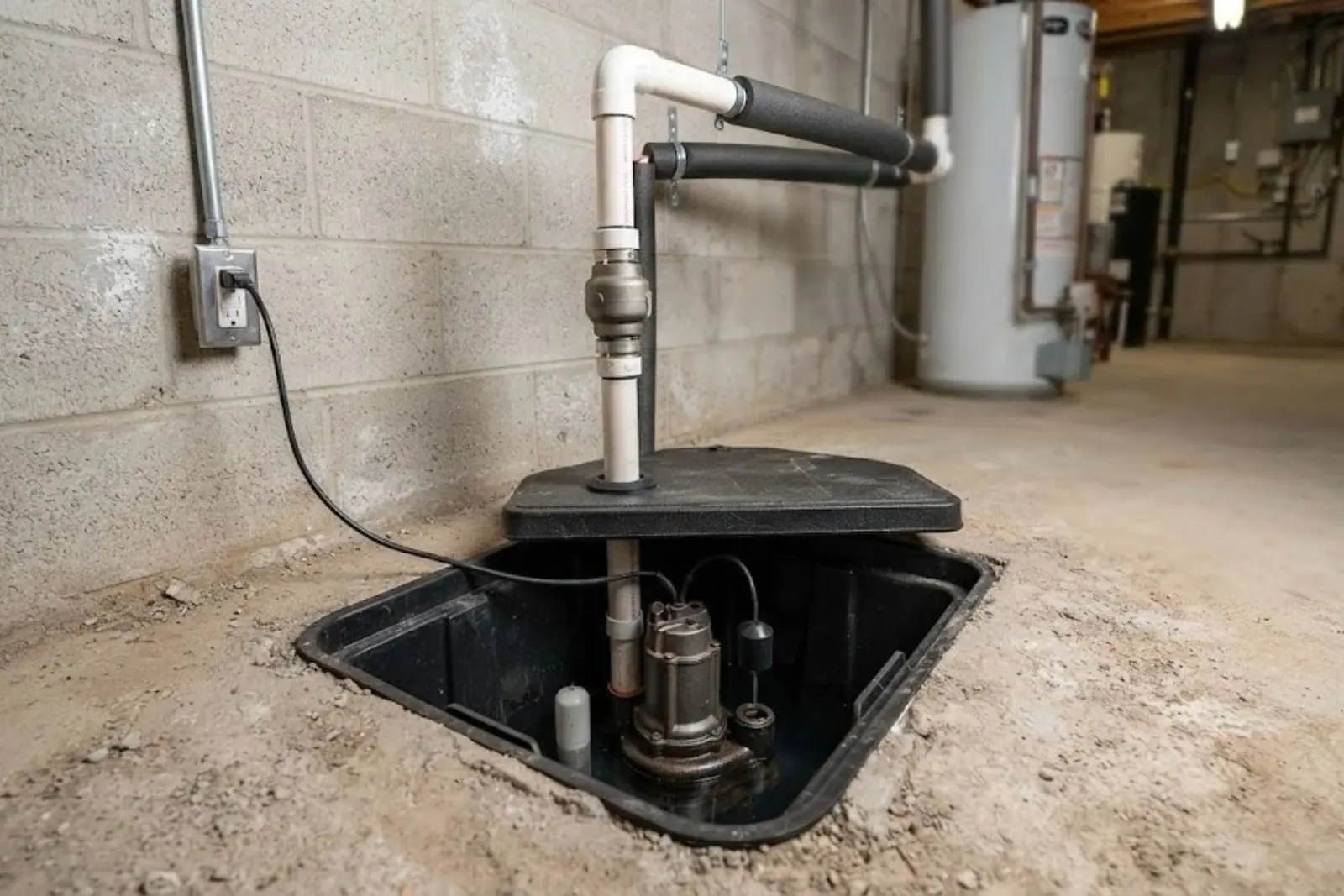
Two pumps, two jobs
Both sit in a pit in the basement floor, which is why people confuse them. What they move and where it goes is very different.
Sump pump
- Removes storm, subsoil and clear water from a pit
- Water usually comes from the soil around the foundation
- Discharges outside, to the lawn or a storm connection
- Open or lightly covered pit with a float
- Failure shows up as a wet or flooded basement
Ejector pump
- Lifts sewage from basement fixtures to the sewer line
- Waste comes from toilets, sinks, showers or laundry
- Discharges into the home's sewer drain line
- Usually a sealed, vented basin with a lid
- Failure shows up as slow drains, odors or sewage in the basement
Illinois Plumbing Code (77 Ill. Adm. Code 890) defines a sump pump as a pump for removing storm, subsoil and clear water waste drainage from a sump. That definition is a useful test: if the pit receives toilet or drain waste, it is not a sump.
Why a basement needs an ejector pump
Sewage normally flows down by gravity into the sewer line. If a basement bathroom, laundry or bar sink sits below the level of that line, gravity cannot carry the waste out, so an ejector pump lifts it.
Not every home has one. Homes where all fixtures sit above the sewer line, or where there is no basement plumbing, do not need it. If you finished your basement or added a bathroom, ask the plumber or the previous owner whether an ejector basin was installed.
How to tell which pump you have
Look at the pit before you call. These clues usually settle it.
| Clue | Sump pump | Ejector pump |
|---|---|---|
| Lid | Open or loose cover | Sealed lid with bolts and a vent pipe |
| Pipes entering the pit | Perimeter drain or none | Waste lines from toilets and fixtures |
| What it handles | Groundwater and rain | Sewage and wastewater |
| Where the discharge goes | Outside the house | Into the sewer drain line |
| Smell | Musty at worst | Sewer odor when failing |
| Runs when | It rains or the ground is wet | You flush, shower or run the washer |
If you cannot tell, do not open a sealed basin. Call a plumber.
Not sure which pump failed?
Call (847) 281-8626 and describe the pit, the lid and the smell.
Signs each pump is failing
Symptoms differ because the two pumps protect against different problems.
Sump pump trouble
Water on the basement floor after rain, a pump that hums but does not move water, or a pump that cycles constantly. FEMA's test is to pour a bucket of water into the pit and watch the pump start.
Ejector pump trouble
Slow or gurgling basement drains, sewage odor near the basin, toilets that do not flush well, or sewage coming up in a basement shower or floor drain. Stop using water and call a plumber.
Both at once
After a storm, a power outage can stop both pumps. Groundwater floods the floor and fixtures cannot drain. Backup power or a battery unit for each pump is worth discussing.
Why the two must stay separate
The Village of Buffalo Grove asks that sump pump discharge be disconnected from the sanitary sewer and directed to the storm sewer or the lawn, no more than 10 feet from the house. Tying a sump into an ejector line would send clear water to the sanitary side, which the village asks owners to avoid, and an ejector line should never be aimed outdoors.
A good plumber checks where each pump discharges during any visit. A storm connection needs a permit from the Engineering office at 847-459-2523.
Who to call and what gets done
For groundwater, a plumber who handles sump pump installation and repair will test the float, check valve and discharge. For a sewage problem, the plumber first finds out whether the blockage is at the ejector, in the house line or in the private lateral, using sewer inspection if needed.
If the pit smells of sewage or sewage is backing up, the next step is often sewer line cleaning or drain cleaning on the house side. Price is explained before work starts, and it depends on the pump type, the basin, access and the hour.
What drives the price of either pump
The two jobs have different cost drivers, so a plumber cannot give a fair price without seeing the pit.
Keeping both pumps in good shape
A little attention twice a year goes a long way.
- Test the sump pump.Pour in a bucket of water and confirm it starts and empties the pit. FEMA suggests replacing one that is over 10 years old.
- Listen to the ejector.It should run briefly after a flush. Long running or a loud grind needs a plumber.
- Flush only what belongs there.Wipes, hygiene products and grease are common causes of ejector clogs.
- Keep the lid on.A sealed ejector lid keeps odors and gas out of the room.
- Plan for power loss.Ask a plumber about backup power for each pump.
Sources for the differences described here
The definition of a sump pump comes from Illinois Plumbing Code (77 Ill. Adm. Code 890), administered by the Illinois Department of Public Health. The pump test and age guideline come from FEMA, and the discharge request comes from the Village of Buffalo Grove sump pump handout.
You can check any plumber's license with the Illinois Department of Public Health verification page before hiring.
Local note
What Buffalo Grove homeowners should know
Buffalo Grove's first homes were single-story, many with no basement, and the village grew about 80 percent in the 1970s. A basement bathroom or laundry added later is the usual reason a home has an ejector pump, so ask for plumbing records if you bought a home that was finished by a previous owner.
Buffalo Creek is the main flood source, and the Cook County hazard plan lists flood declarations through 2013 and state declarations in April 2013 and July 2017. A basement that has both pumps benefits from both being tested before storm season.
Our dispatch line also covers Lincolnshire and Deerfield, so a pump question from a neighboring town reaches the same 24/7 line.
Questions we hear from homeowners
A sump pump removes groundwater and other clear water from a pit and sends it outside. An ejector pump lifts sewage from basement fixtures up to the sewer line.
No. A sump pump is not built to handle solids and sewage, and it is not sealed or vented for that use. A plumber should size and install a pump made for the job.
No. Only homes with basement fixtures that sit below the sewer line need one. Many homes have only a sump pump or neither.
The Village of Buffalo Grove asks that sump discharge be disconnected from the sanitary sewer and directed to the storm sewer or the lawn, no more than 10 feet from the house.
Slow basement drains, sewage odor near the basin, poor flushing or sewage in a basement drain. Stop using water and call a plumber.
Yes. The line at (847) 281-8626 is answered around the clock, including weekends.